Coriolis, Wind and Neptune
(Greg)
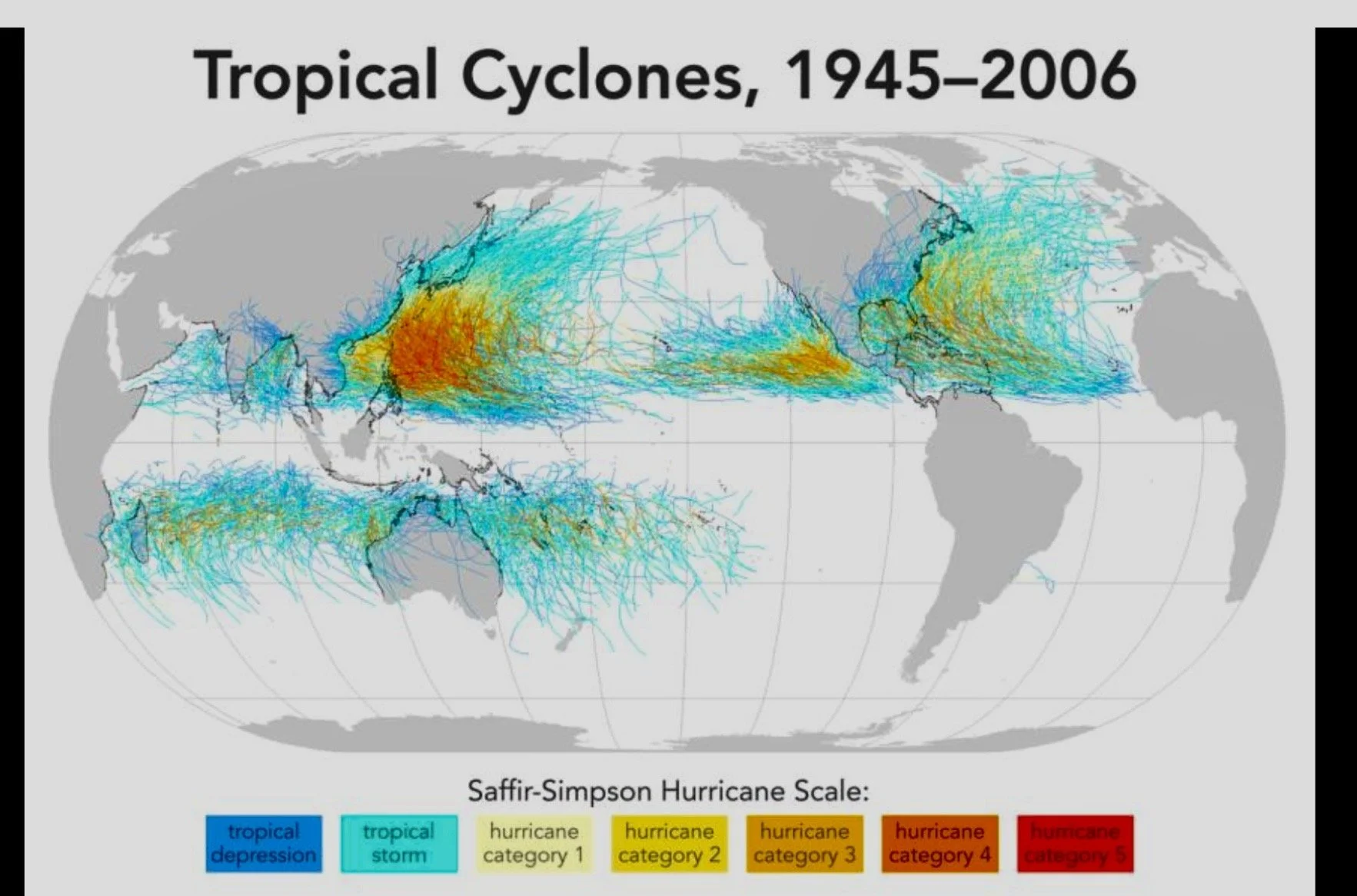
Note the lack of action in the equatorial band
We often get the same question: “Aren’t you afraid of storms?” The answer is, of course, damn right we are. But the beauty of sailing around the world, East to West, roughly within 600 nautical miles of the equator is twofold: first advantage are the trade winds that blow pretty consistently east to west allowing us to sail downwind and not be constantly banging into waves or heeling over with the sails close-hauled all the time. The second advantage is the very low likelihood of large dangerous weather systems in that equatorial band ringing the planet.
Both the favorable trade winds and the steady, benign weather are gifts given to us by The Coriolis Effect. Here I will try to explain. The earth is a large spinning ball but the speed it spins is not the same everywhere. At the “fat” part on the equator it moves about 1,000 miles an hour but at the poles it is hardly spinning at all. So if you could throw a paper airplane due south from the north pole straight to the equator, the airplane would land way to the right because the earth is spinning increasingly fast underneath it. This is why weather systems spin. High pressure wants to rush to low pressure but it can’t rush in a straight line because of the Coriolis effect. Hence, weather systems and hurricanes in the Northern hemisphere spin counter-clockwise and weather and cyclones spin clockwise in the Southern hemisphere.
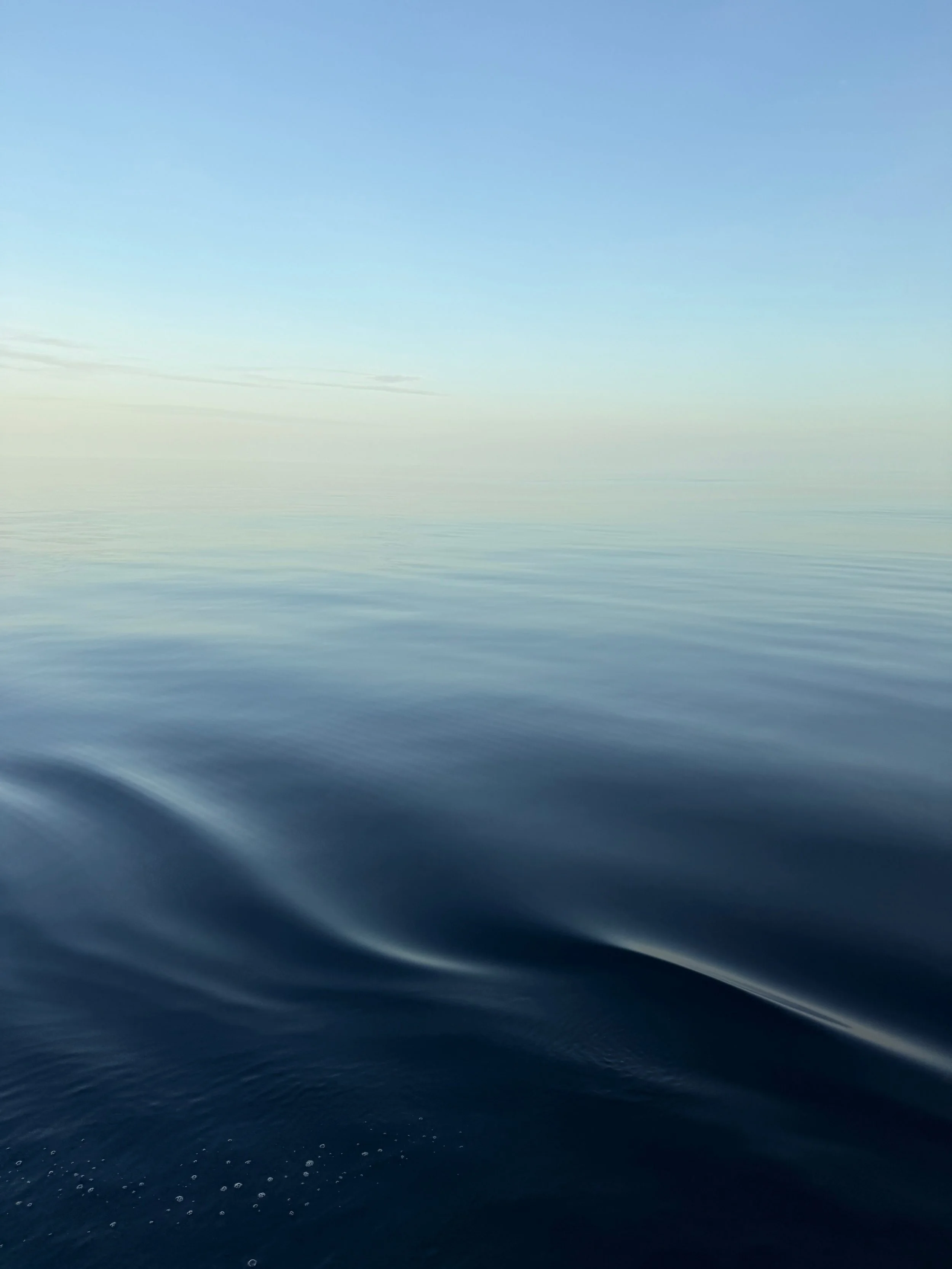
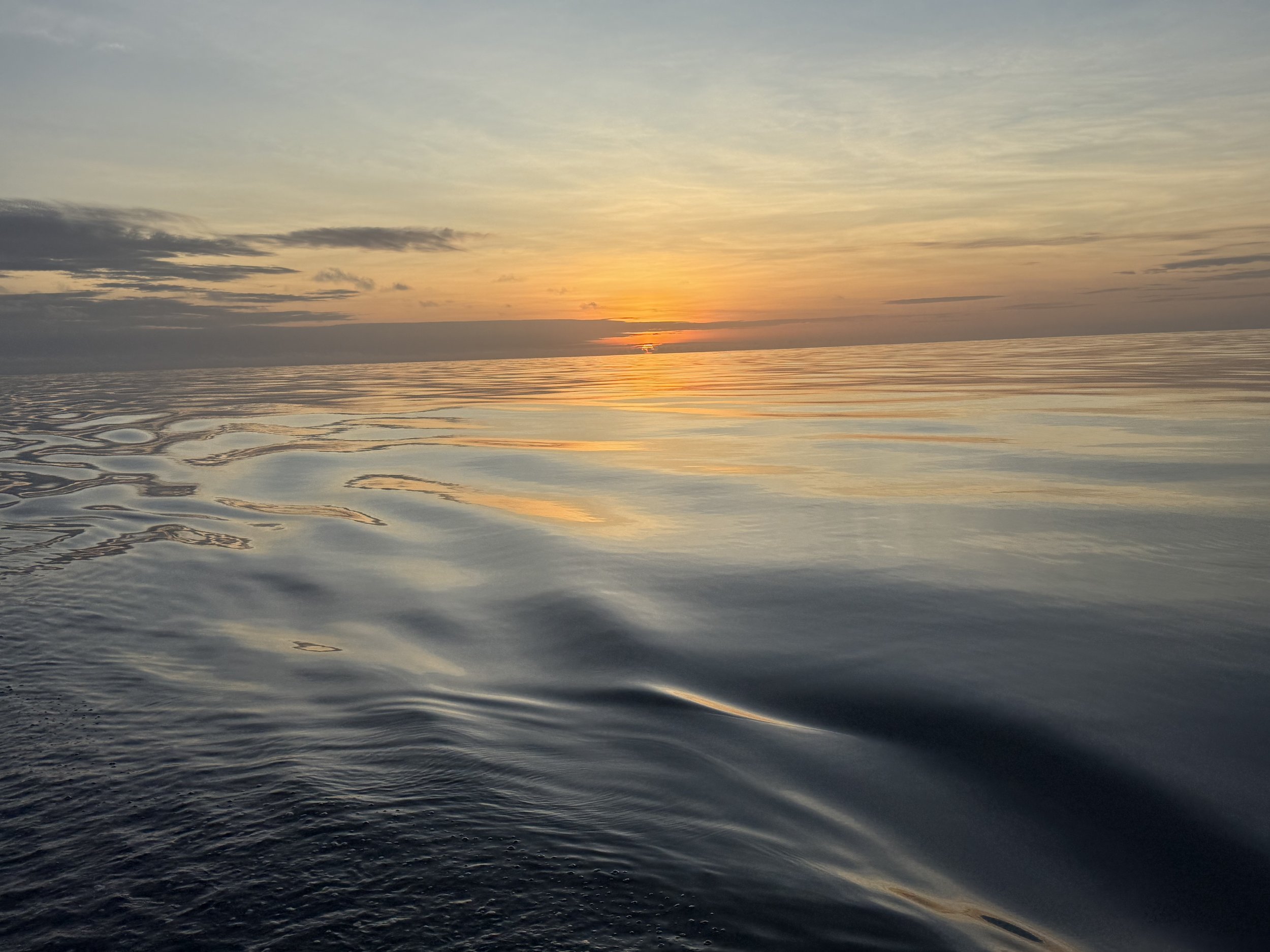
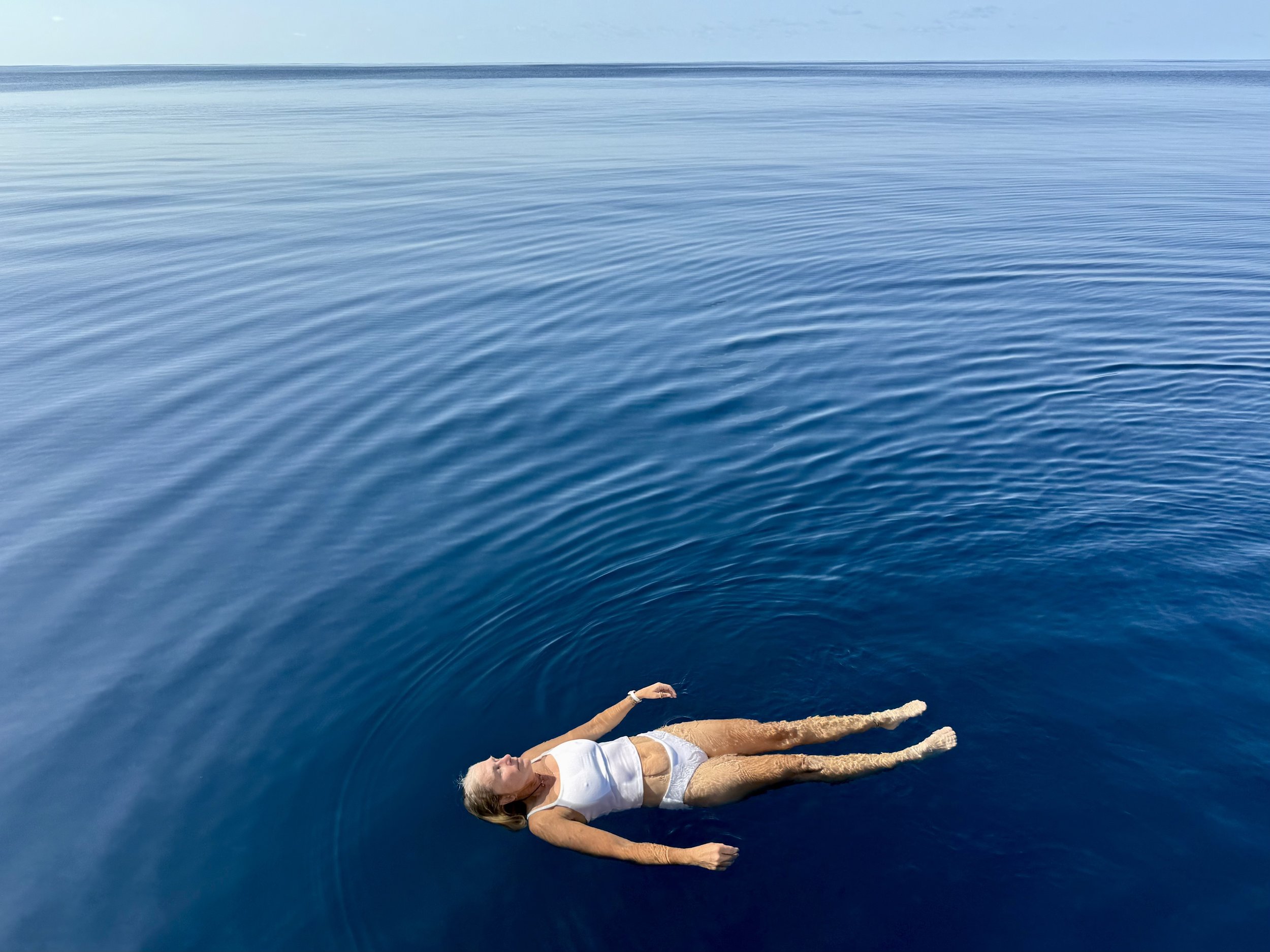
Doldrums: calm, oily-looking mirror seas
This dynamic creates two very important weather conditions for Latitude. First, the Doldrums. This is the part of the world where, we have experienced firsthand, not a lot of wind appears to be blowing. In fact, there is wind but it is vertical wind not horizontal wind. The equator gets the most sunlight on earth and that heat rises creating convective vertical wind. In addition, here at the ITCZ (the Inter-Tropical Convergence Zone) the horizontal tradewinds from the north and south hemispheres meet, neutralize each other and are forced upward in convection. Result: calm almost oily-looking mirror seas.
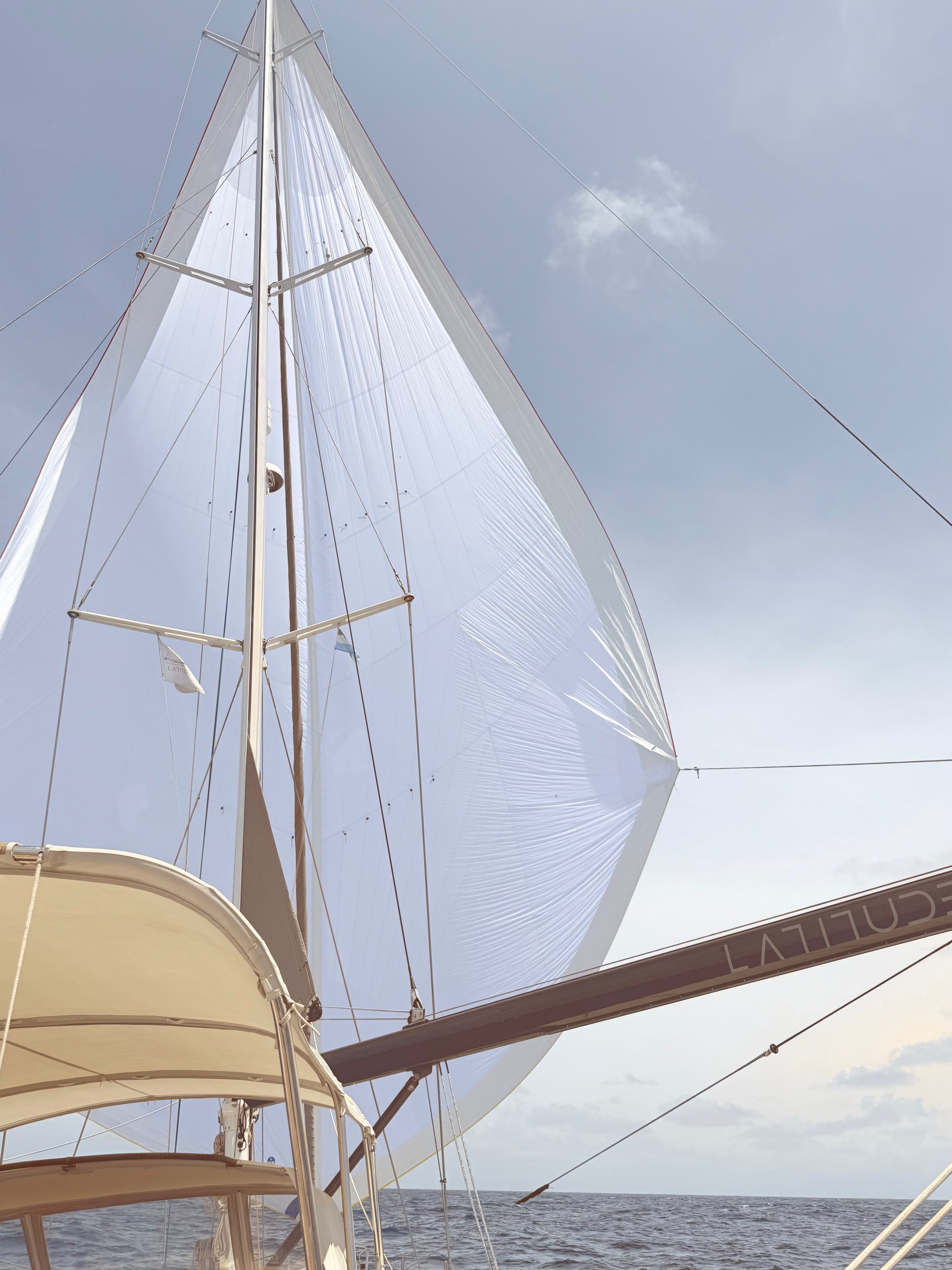
On the downhill run to The Marquesas
Second, those very same tradewinds. These are pretty consistent winds blowing westward. They are created by the convection of the ITCZ Doldrums and the Coriolis effect. The convection of the doldrums creates a vacuum. Cooler, heavier air from the north and south rush in to fill the void. If it were not for Coriolis, they would go in a straight line directly towards the equator. But because the earth is spinning to the east, the wind gets deflected to the west and we ride the Tradewind Conveyor Belt downhill all the way to the Marquesas.
Coriolis gives us the pleasure of the trade winds at the cost of the doldrums. Five straight days of motoring on surreally flat, mirror seas. The sunsets and moonrises were intense. And appreciation of the internal combustion engine was universal.
And Finally…
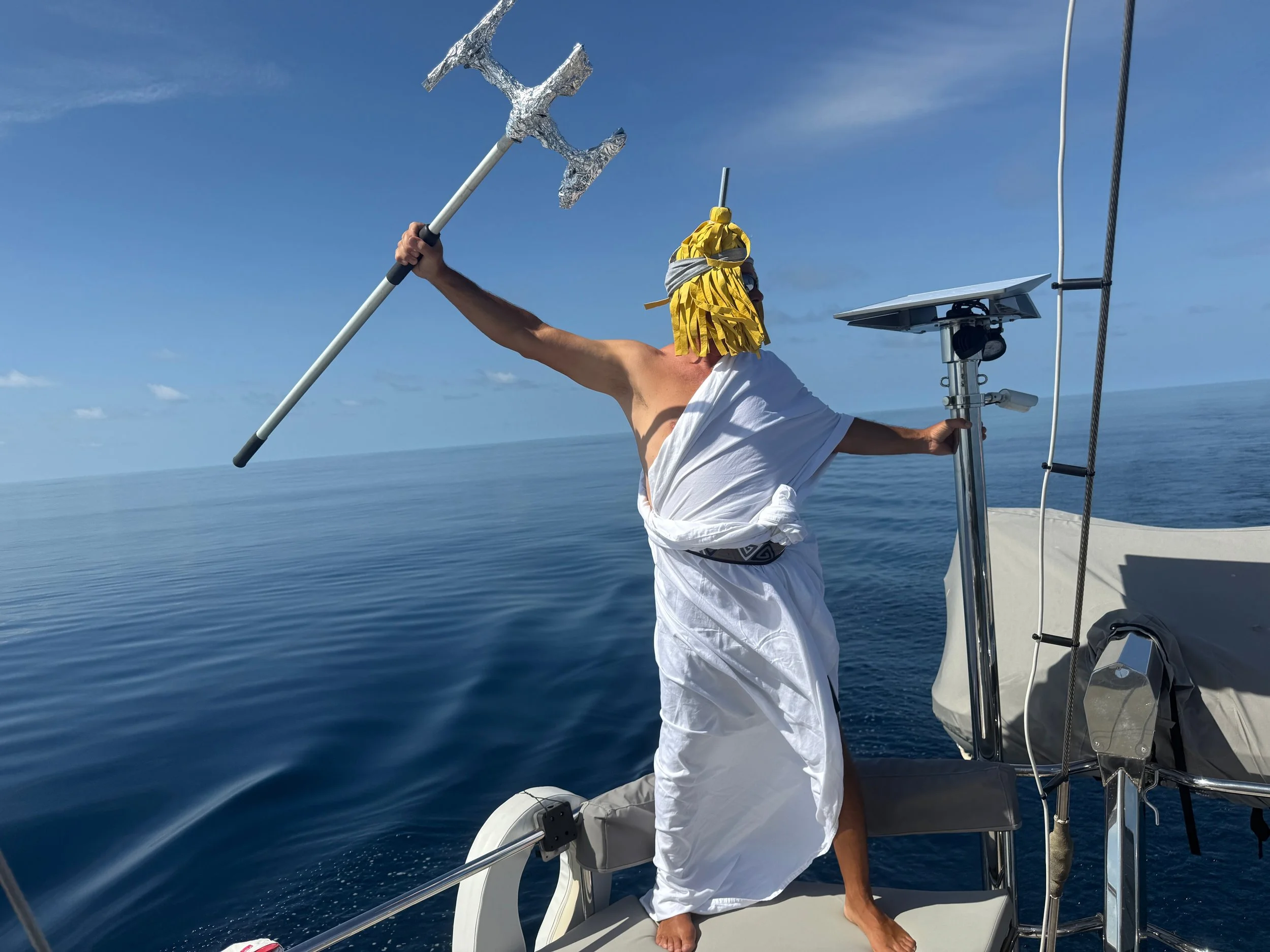
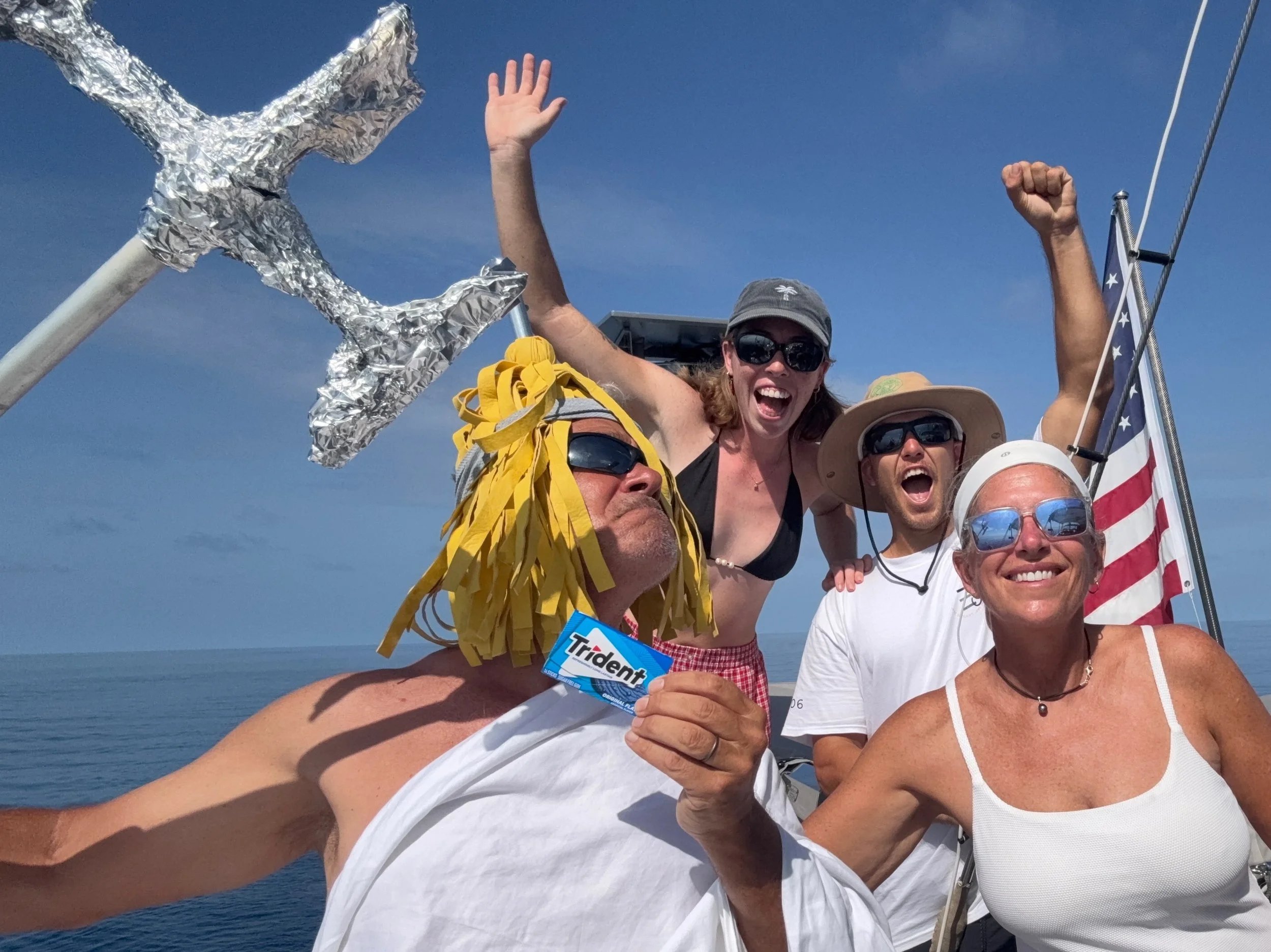
The final feature of the equator was a bit more improvised. Maritime tradition requires a silly but important event as boats travel across the equator. Neptune (or Poseidon for our Greek friends) challenges the wet back Polliwogs who have never sailed across the line to prove their worthiness to be welcomed into the Sea God’s Southern realm as newly-initiated “Shellbacks.” There is dressing up and over acting and general self-conscious merriment. The whole crew of Latitude were already previously-initiated Shellbacks, but we over-acted nonetheless. You can be the judge…