A Sapphire Found
(Greg) The prelude to our arrival in magical Niue was an unexpectedly energetic and poorly forecasted low pressure system spinning off New Zealand. 40 knot winds at our stern and very large breaking waves tested both Latitude and its crew. Two person watches were mandatory. At around 4AM, a large breaker hit our port rear quarter and forced the boat to round up too far to the left. We heeled way over to the right. So far in fact that suddenly Dana was thrown from the port side of the cockpit to the starboard and directly into my lap; we were sideways perpendicular to the wind and waves and I was pinned by Dana and gravity on the low side. Water came up over the rail, reached into the cockpit and stole two velcro’ed cockpit cushions. It tore the leather from the starboard boarding ladder and ripped the starboard life ring secured to the aft rail into pieces. But, that tempest brought us to Niue.
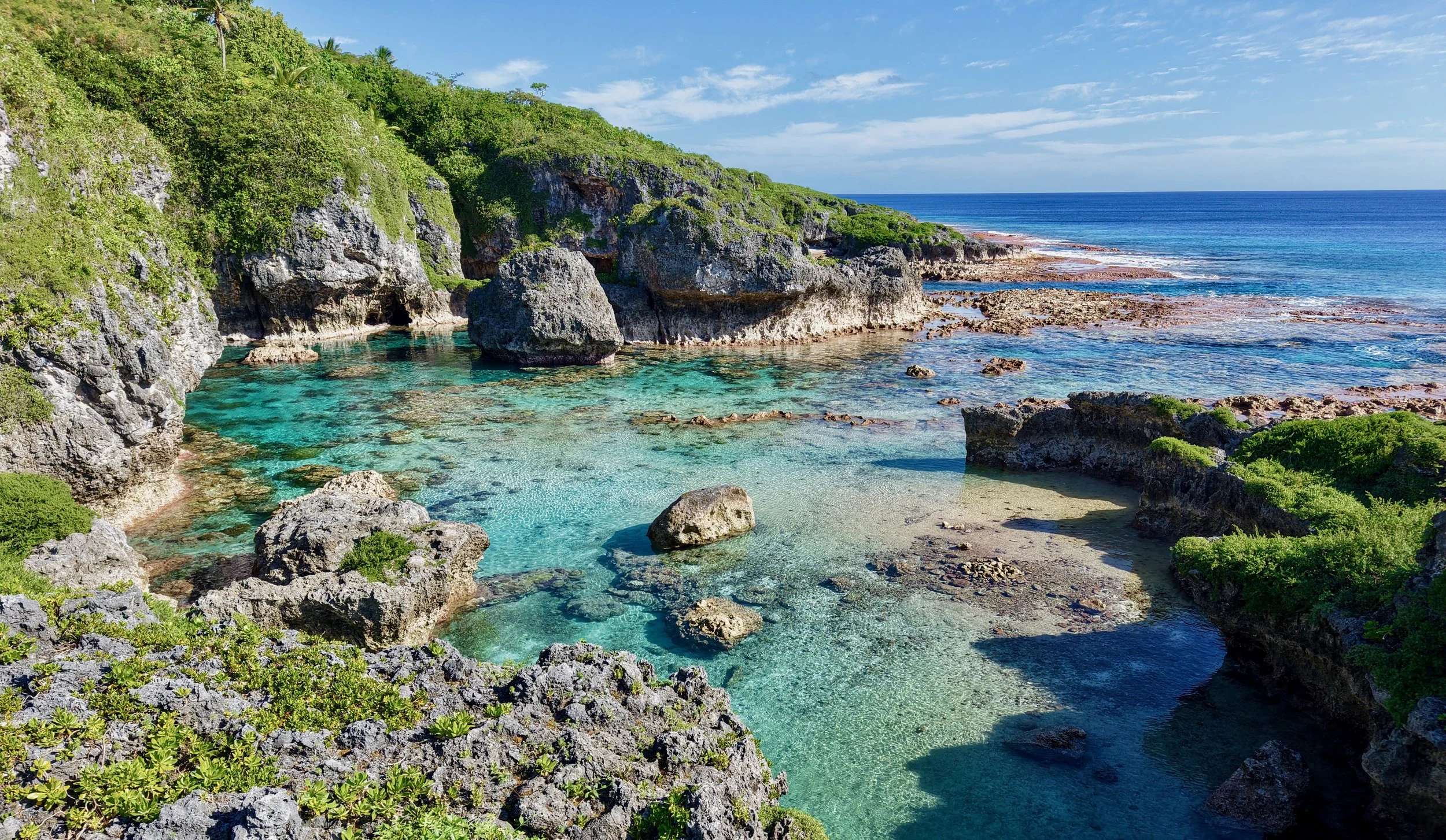
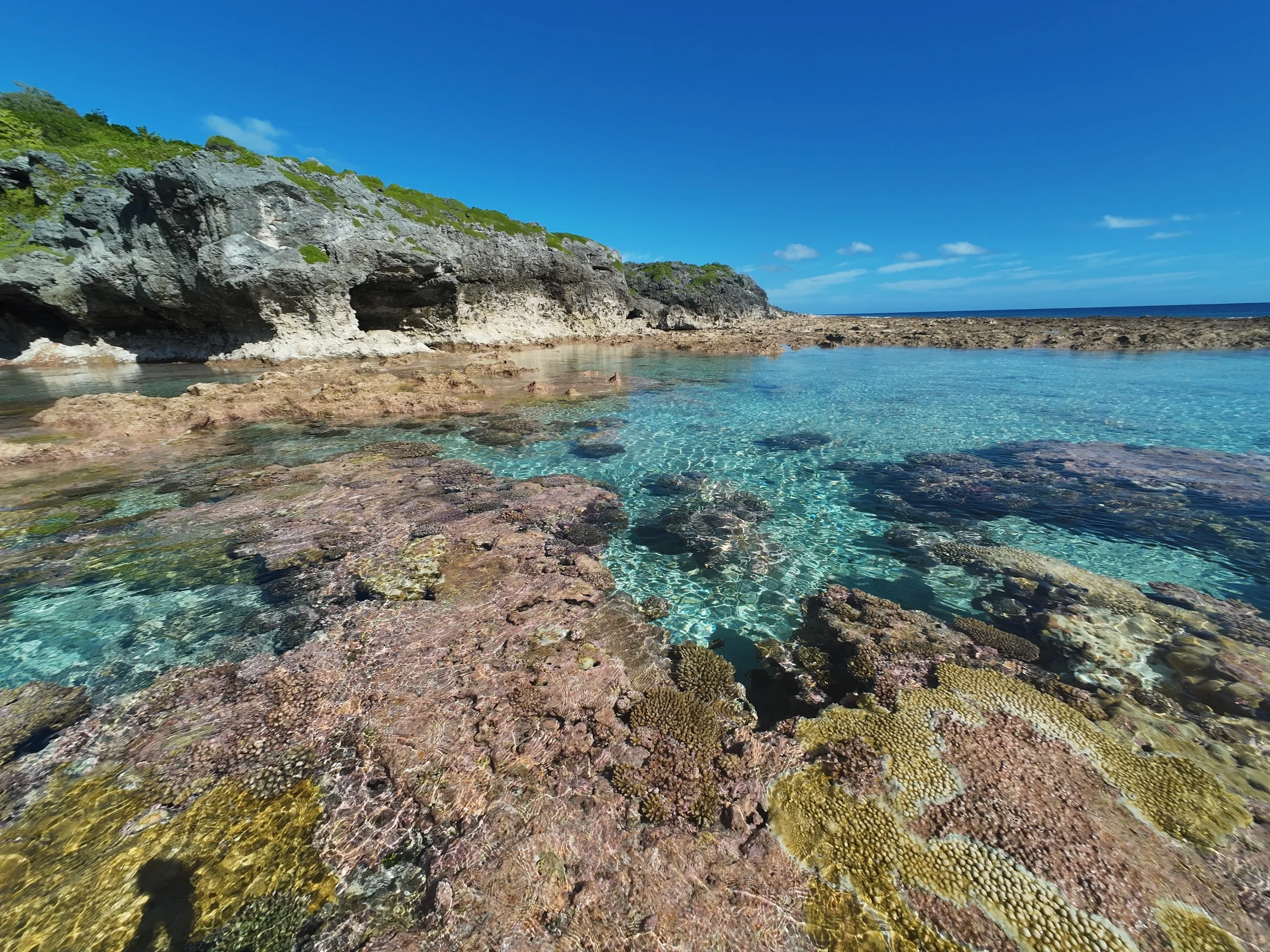
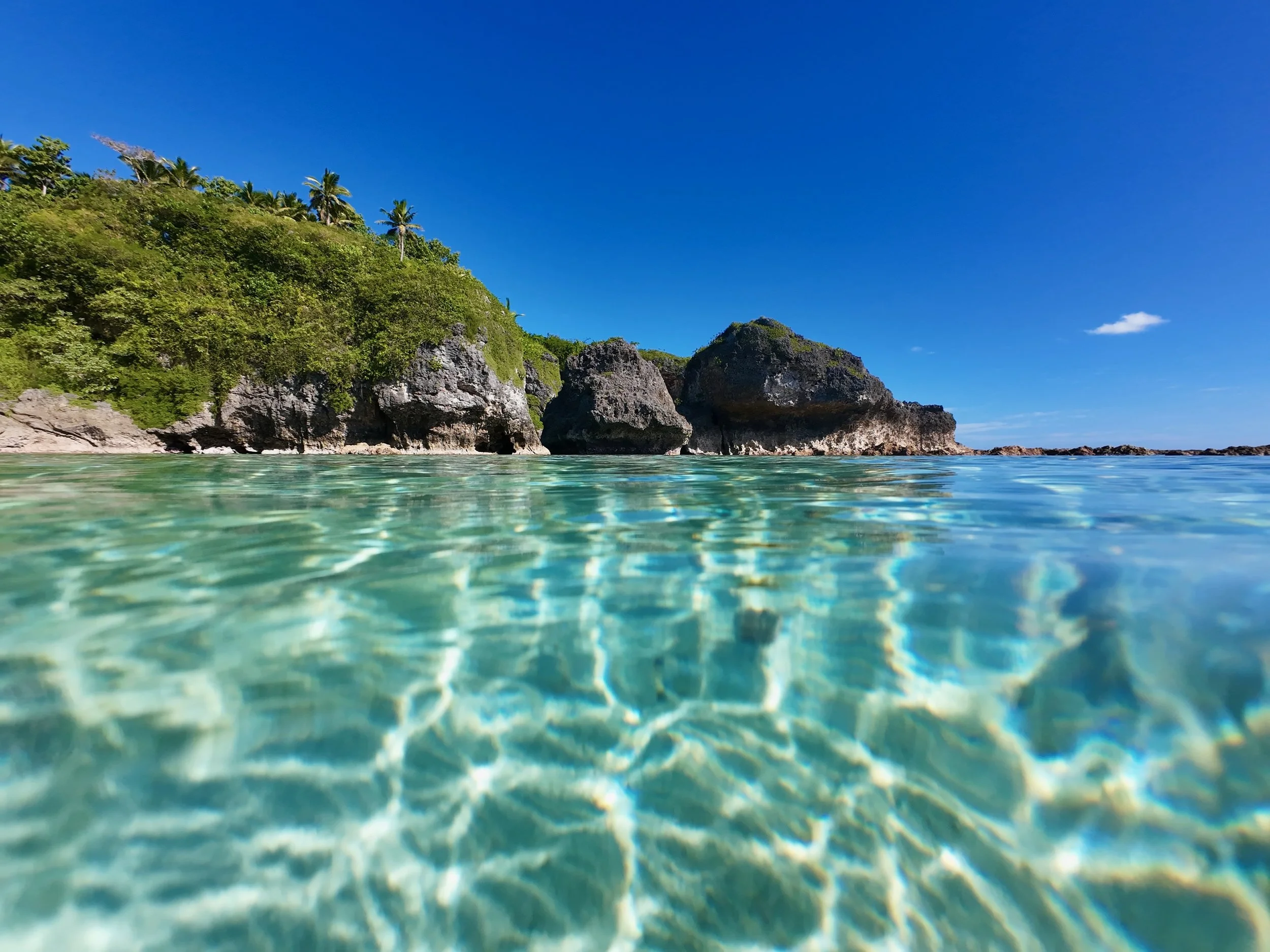
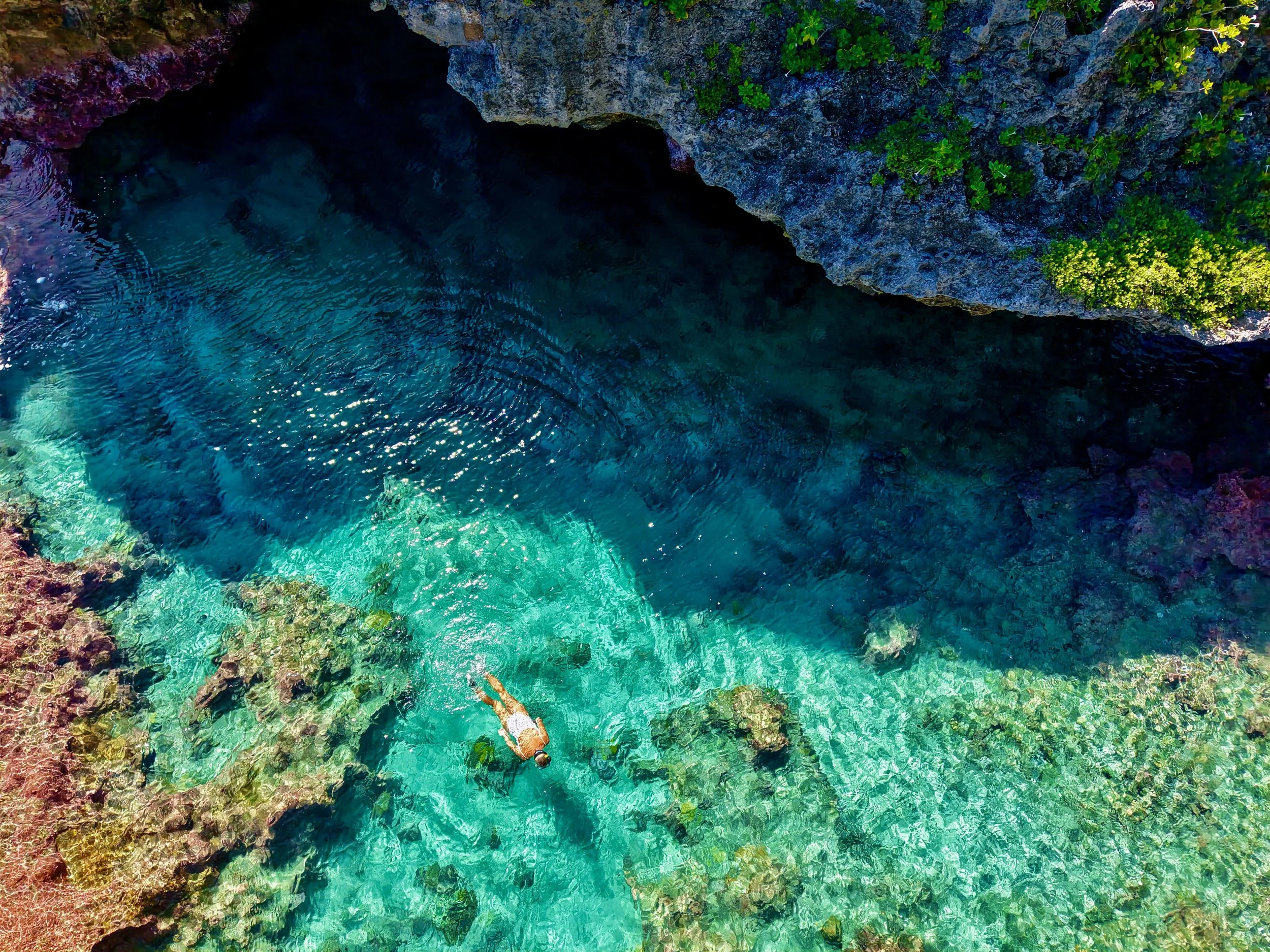
Niue, “The Rock of the Pacific”, is aptly named. It is a limestone coral atoll pushed up from the sea bottom about 500,000 years ago. 100 square miles (about a third of New York City’s total area), 1600 self-governed inhabitants, no beaches and little soil. This last characteristic is what makes it so sapphire. Niue’s closest neighbor is Tonga 240 miles to the west. The water surrounding it is pristinely perfect. No people. No dirt runoff. No fertilizers. Just crystal blue water and dramatic landscape pushed from the sea.
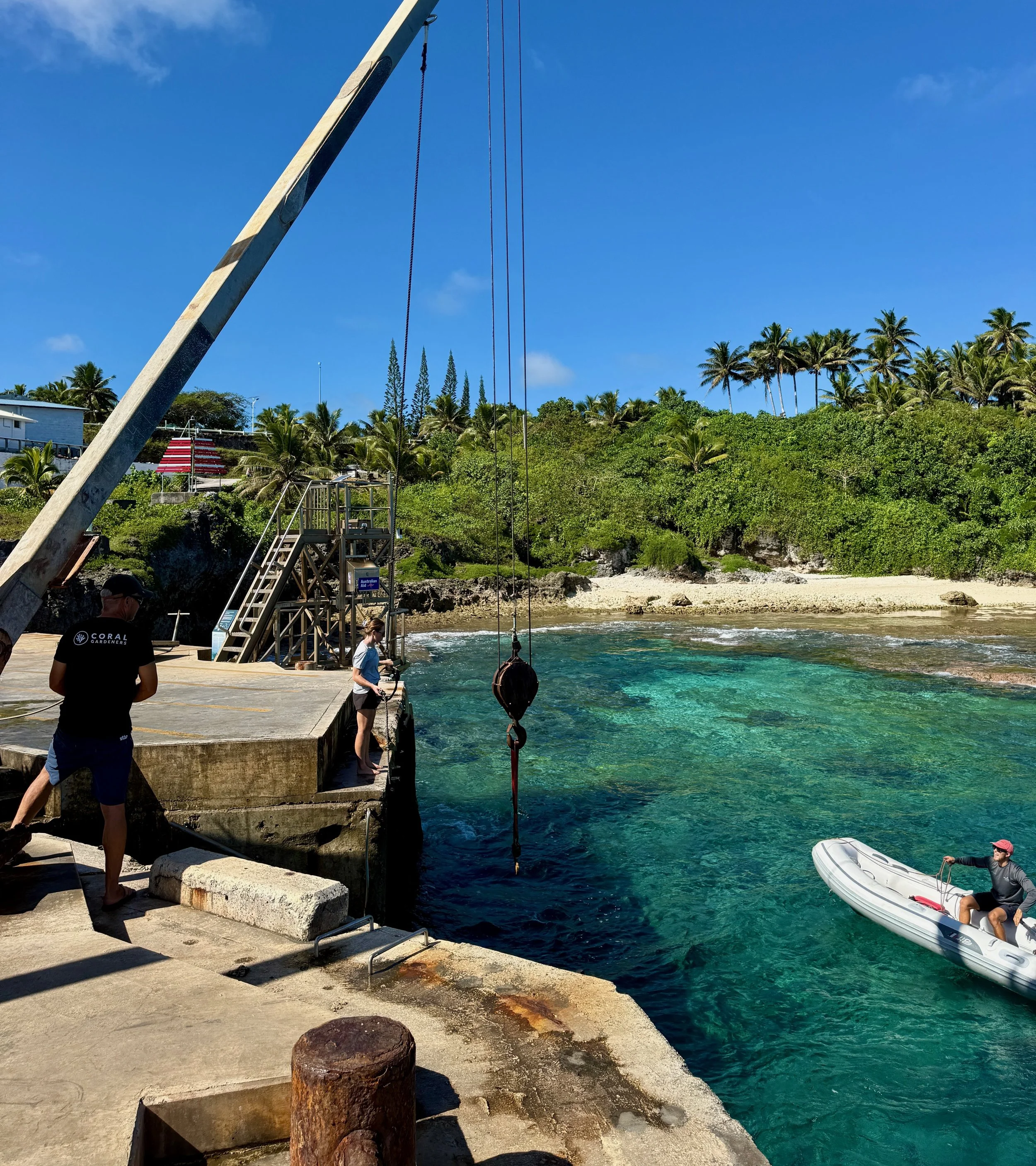
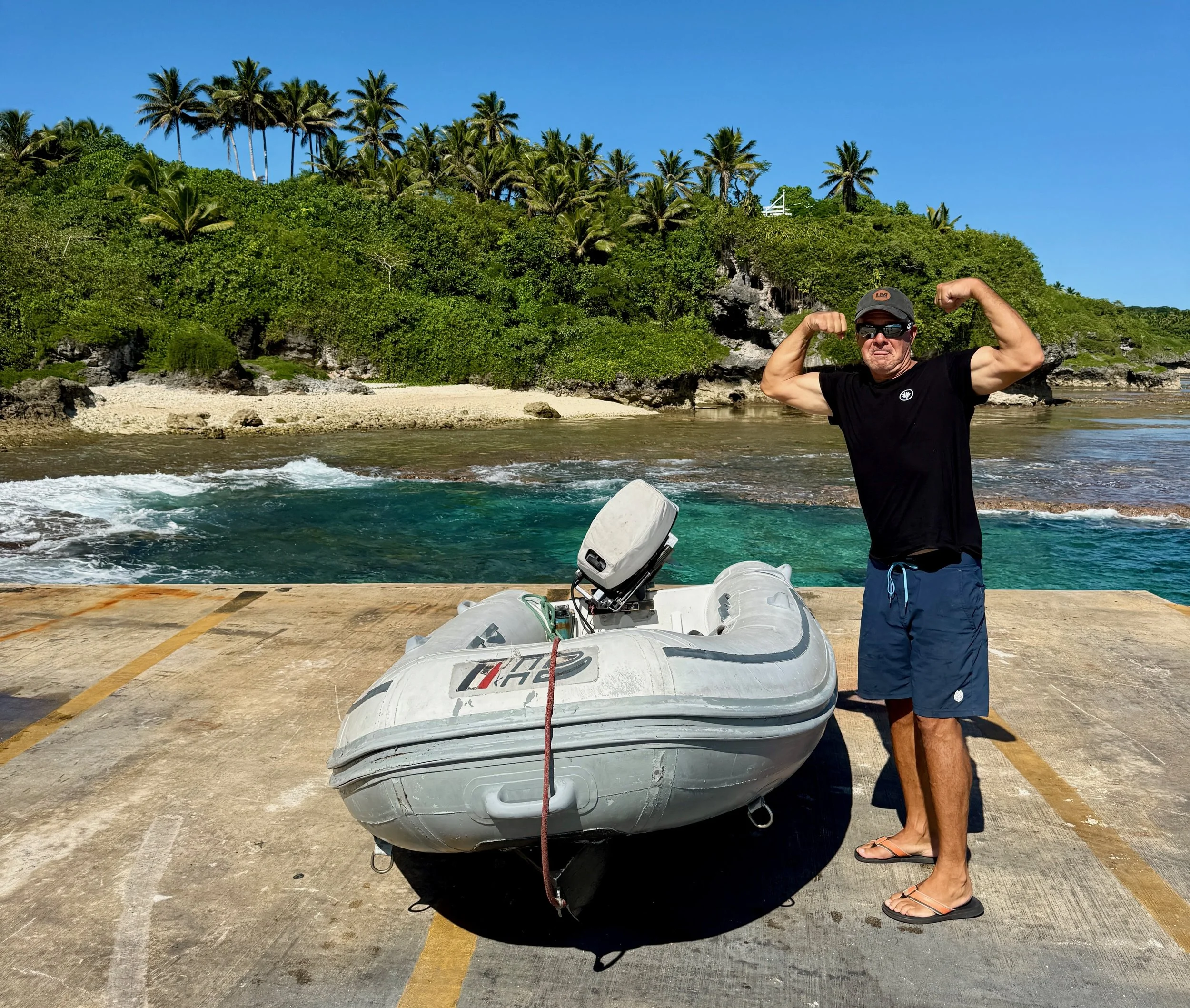
What makes Niue so pristine also makes it hard to access. The only anchorage is on its west side but so deep and unprotected from swell and surge that conditions need to be calm and blowing from the east to make stopping there possible. Likewise, there is no beach to land our tender or dock to tie up to. Niue is so exposed that any dock would last no longer than the first blow from the west. Instead, there is a tall, large concrete wharf where the twice-monthly supply ship ties up. That’s where the famous Niue boat crane is located. To get onto shore, one must time the swell to let off passengers on a slippery ladder leading to an equally slippery stairway. As the dinghy pilot stays aboard, the just-disembarked passengers swing the large electric crane above the water, lower the greasy hook to the bobbing teammate to secure to a bridle, then the bobbing guy grabs a rope and Tarzan’s over to a set of smaller stairs while the dinghy is lifted to the wharf. Assuming Tarzan has swung safely, the tender can then be swung wharfside, lowered onto a large-wheeled cart and finally unceremoniously dumped onto the cement wharf to free up the single wheeled cart for the next team. Really good stuff and yet another example of why I was so happy to have bought an older aluminum hulled tender for this journey.
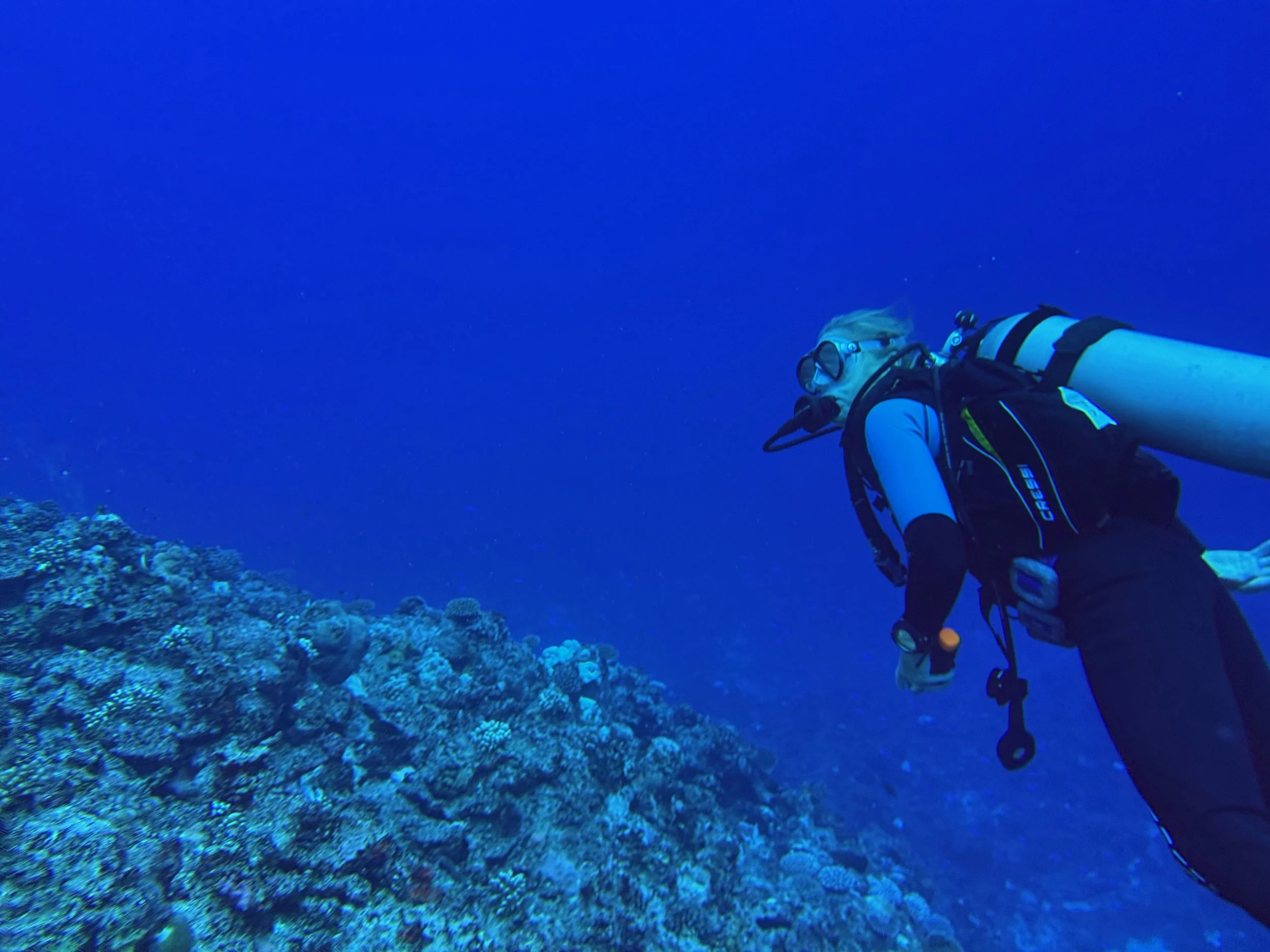
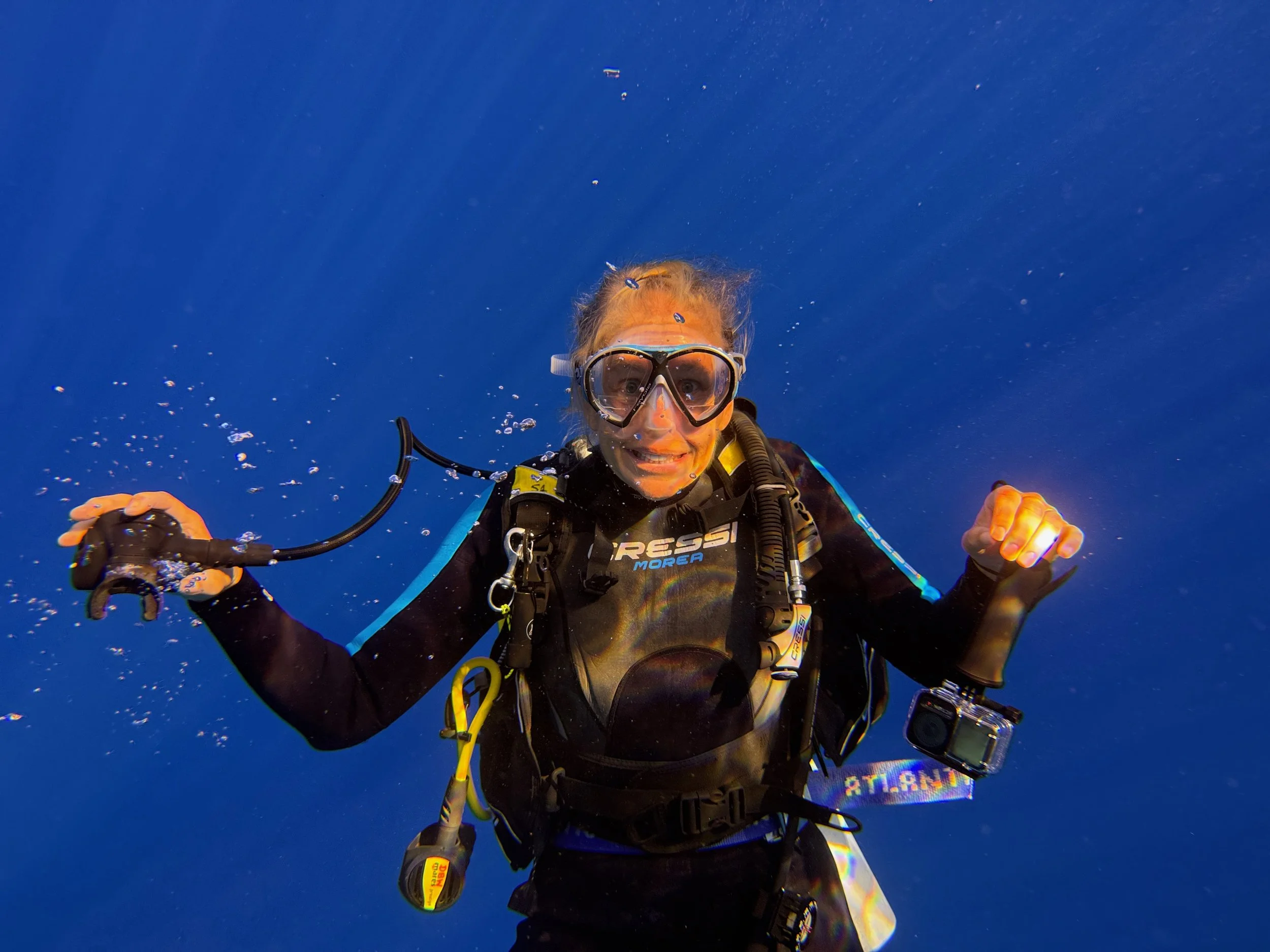
We spent three glorious days exploring “The Rock,” but at this point in my account, images can bring its sapphire magic to life far better than words ever could.