Vacation or Relocation?
(Dana)
When we told people we were leaving to circumnavigate the globe, many said, “What? You’re leaving for fifteen months? That’s crazy!” Out here in the South Pacific, we have met many families and cruisers who are sailing for multiple years; they say, “What? You’re doing a circumnavigation in only fifteen months? Are you crazy?” Context certainly drives perception of our undertaking!
Now that we are four-months into this journey (over 25% done), we have also been reflecting on our existence aboard the Sailing Yacht Latitude.
On the one hand, this is an adventure. So many days bring extremely cool experiences:
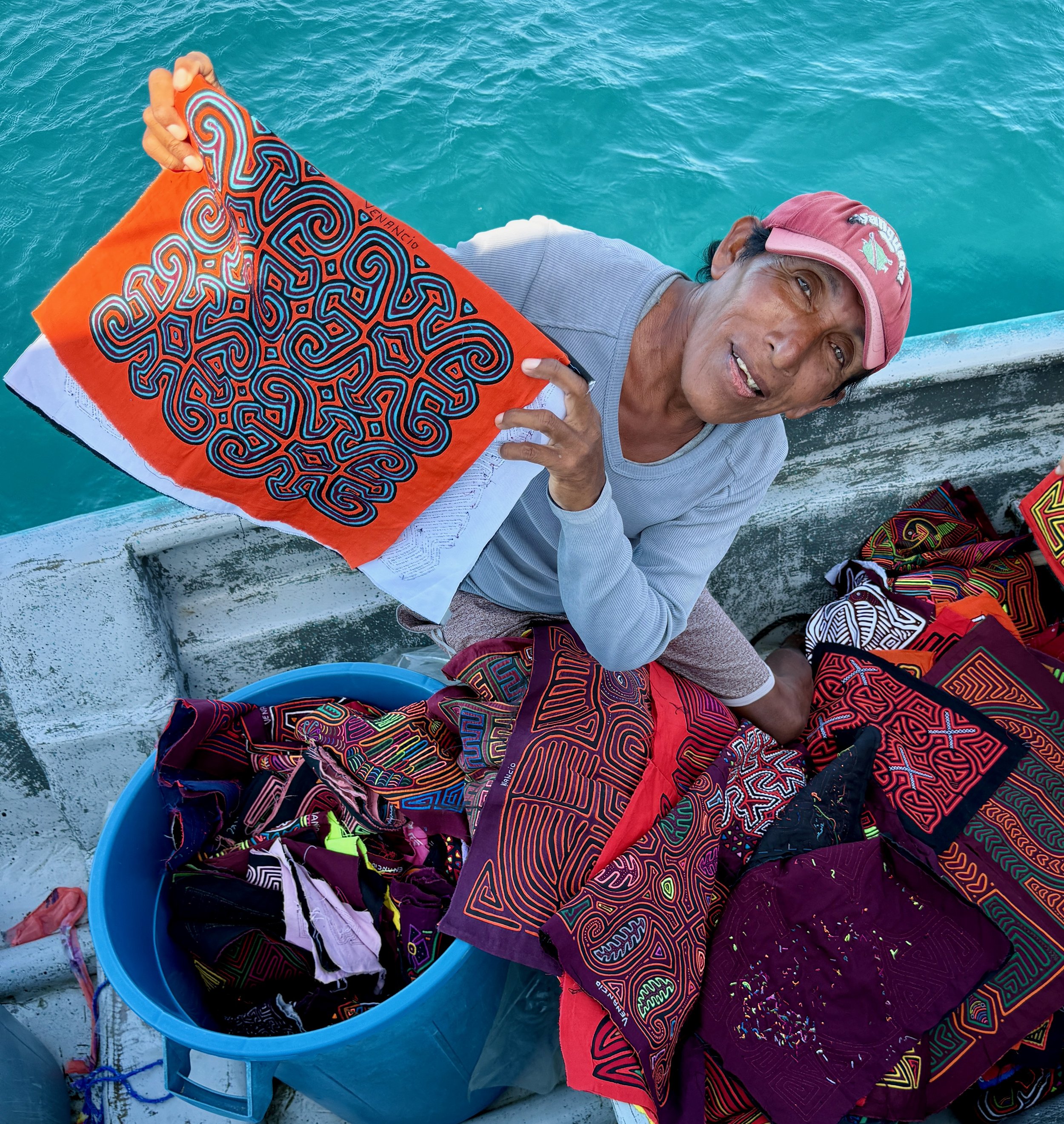
Mola in Guna Yala
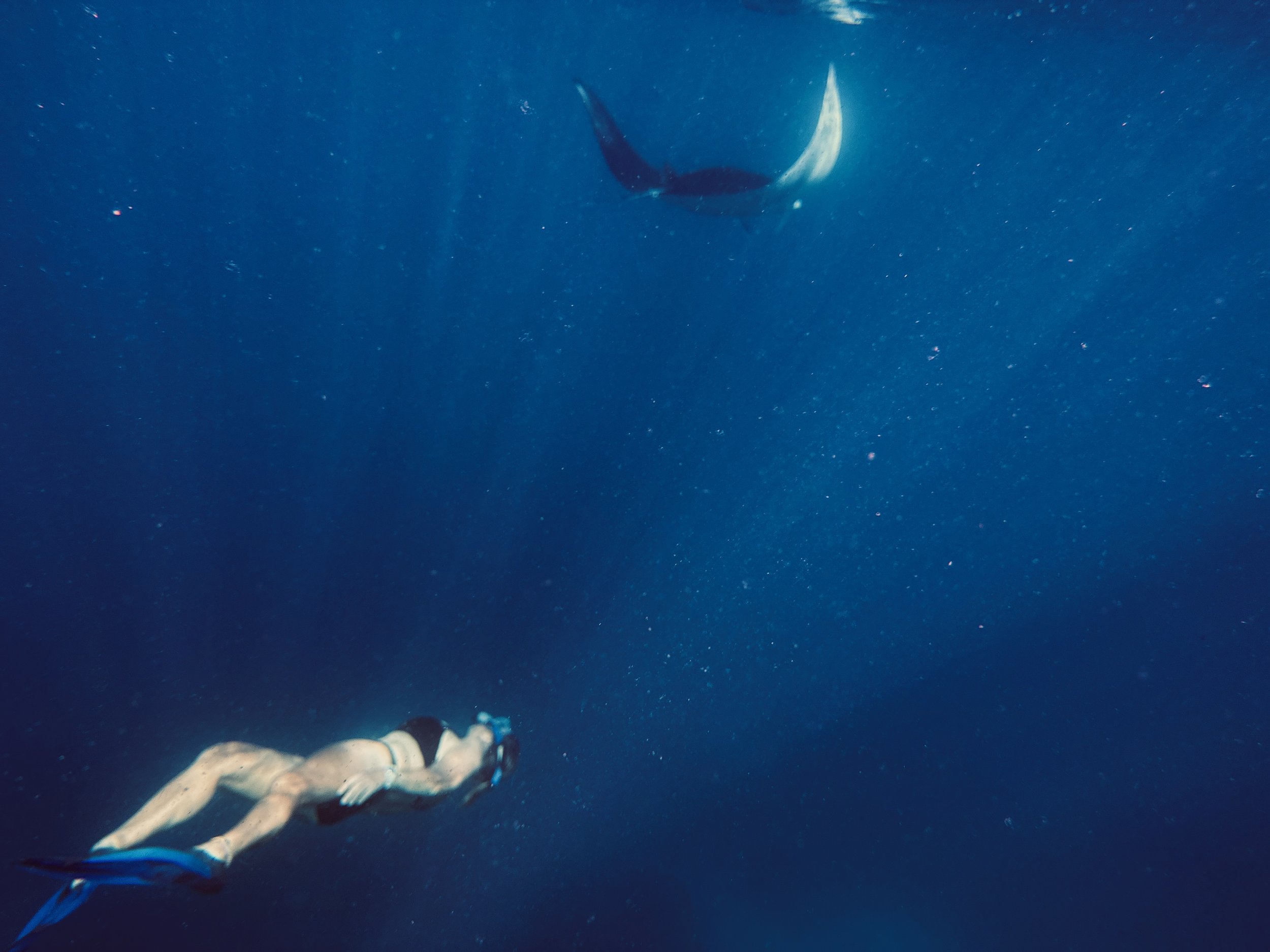
Dana and her spirit animals
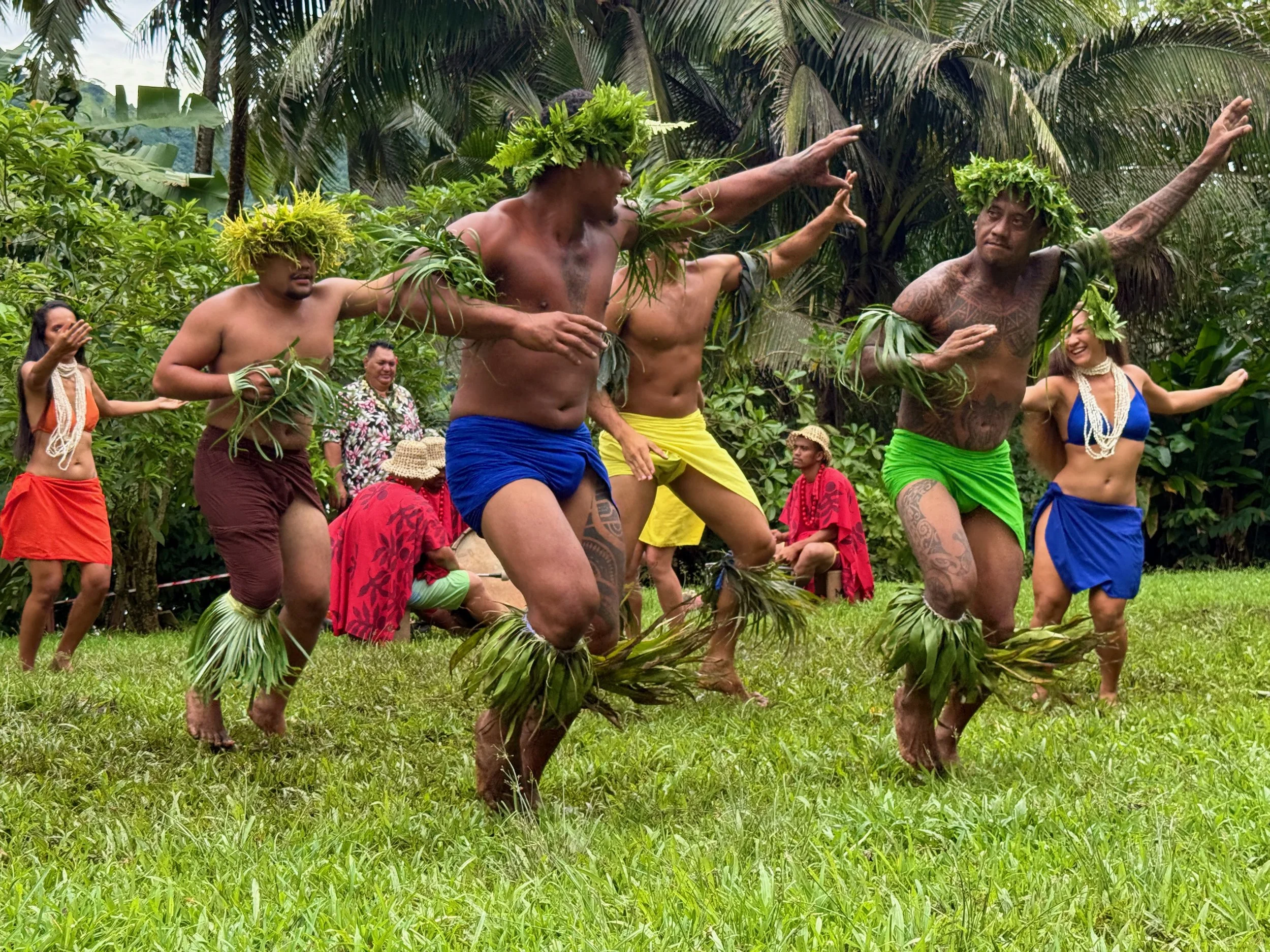
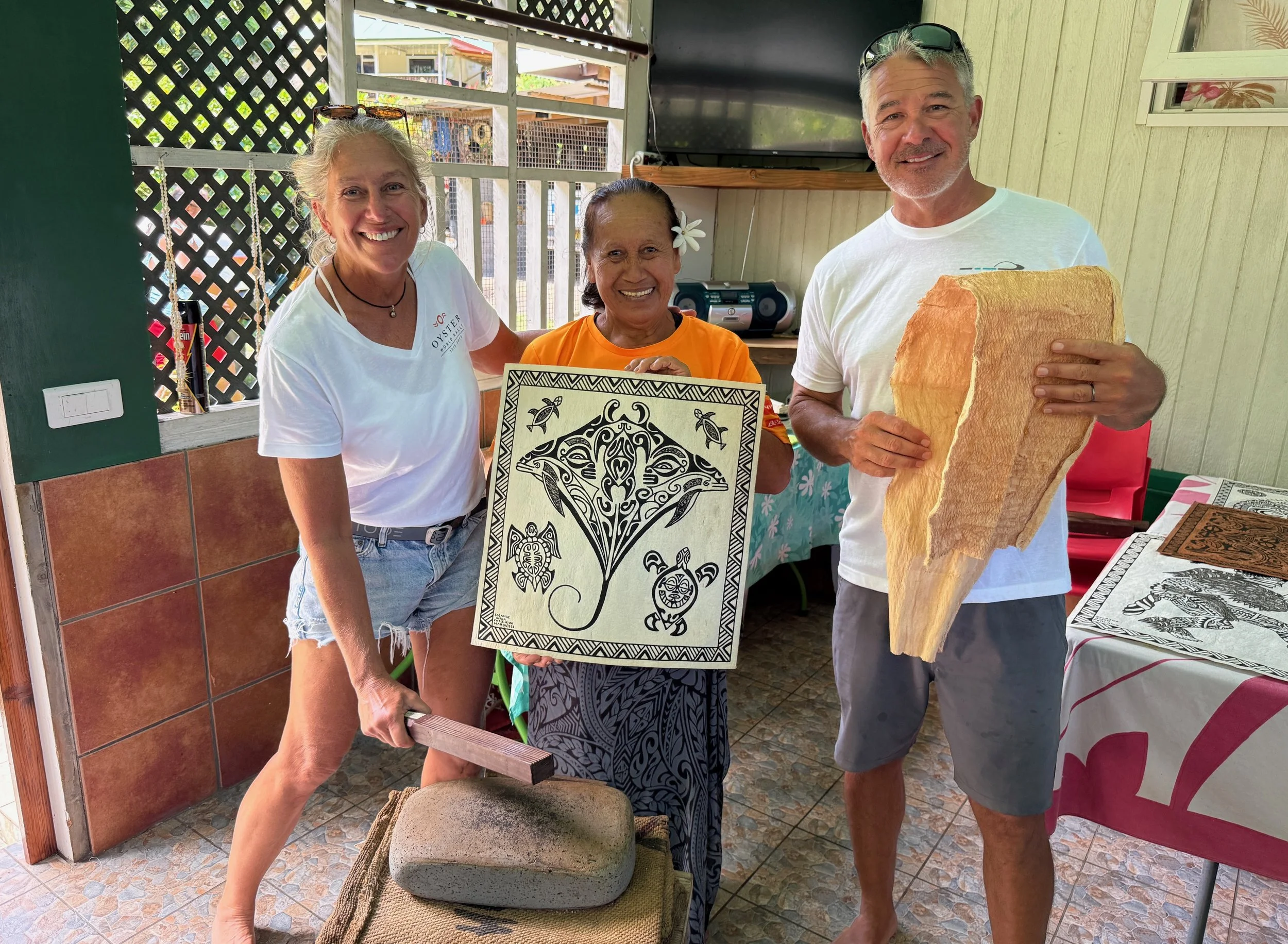
Interacting with artisans who are maintaining traditions and crafts that have been part of these cultures for millennia. I am especially impressed by the younger generation who are embracing the traditions to make sure they are not killed off by westernization. Like molo fabric art of the Guna Yala people in Panama; Marquesan tiki carvings; and dancing both in the Marquesas and Society Islands. Even tattooing, which was banned by the French clergy and the colonial government until the 1980s has clearly resurfaced among the younger generations (and the tourists).
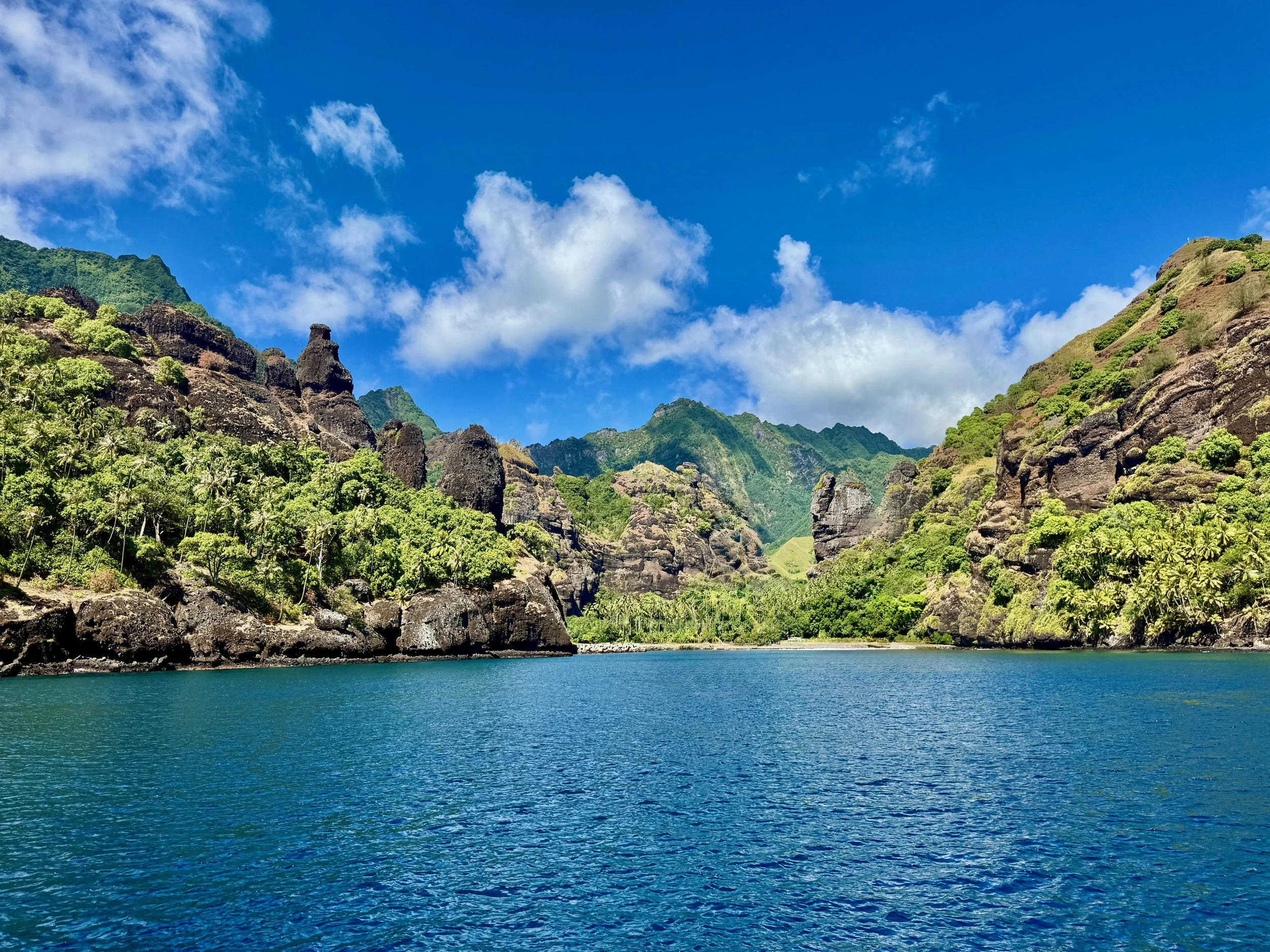
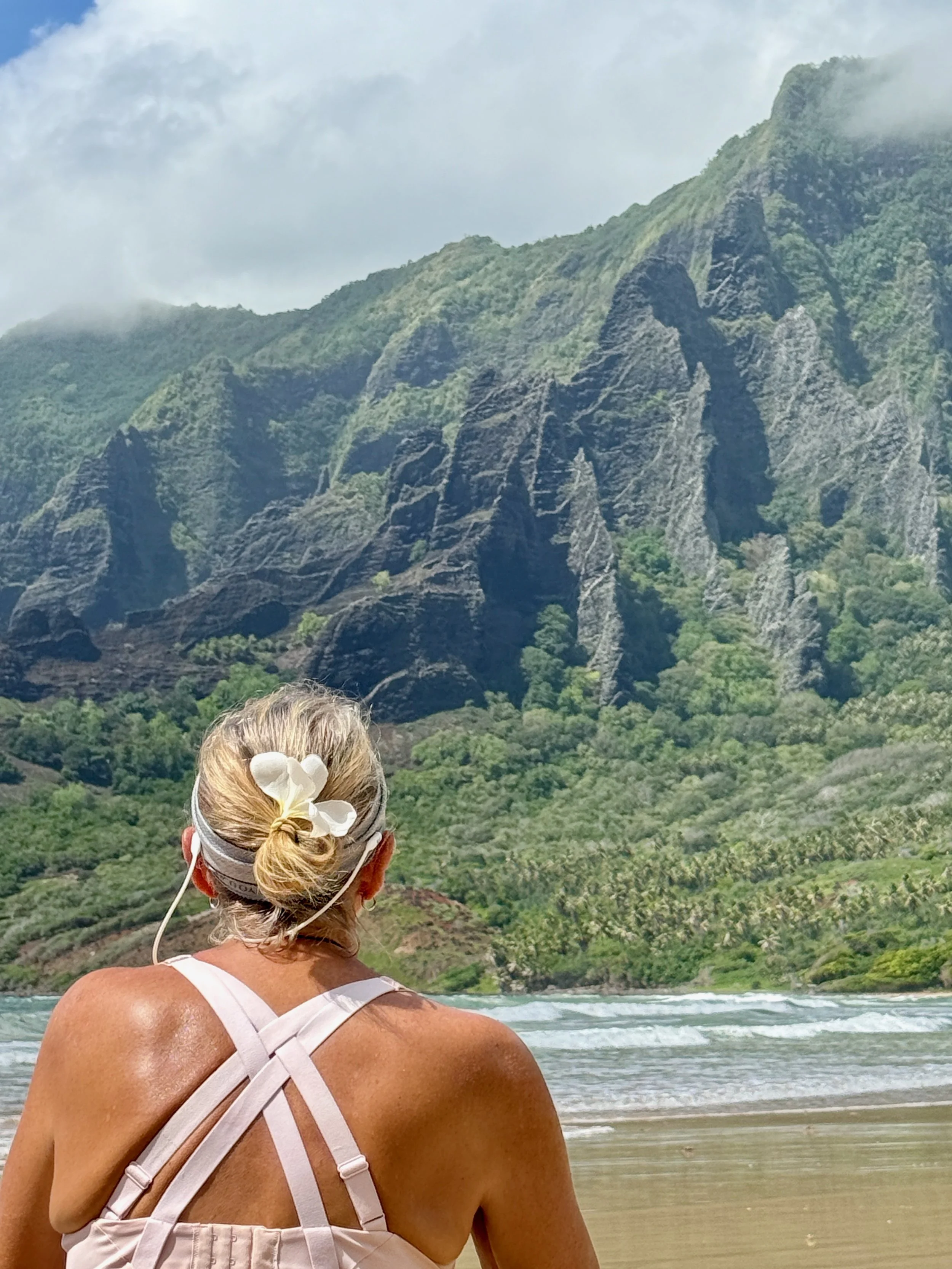
Awe inspiring natural beauty above water abounds. We have reveled in the landscapes of the Marquesas where the mountains seem to drop right down into the ocean. We have hiked through pristine jungles in Providencia and Galapagos. And we have been refreshed in the cool pool below the waterfall on Oa Po. We are so lucky to be experiencing places not overrun by tourism.
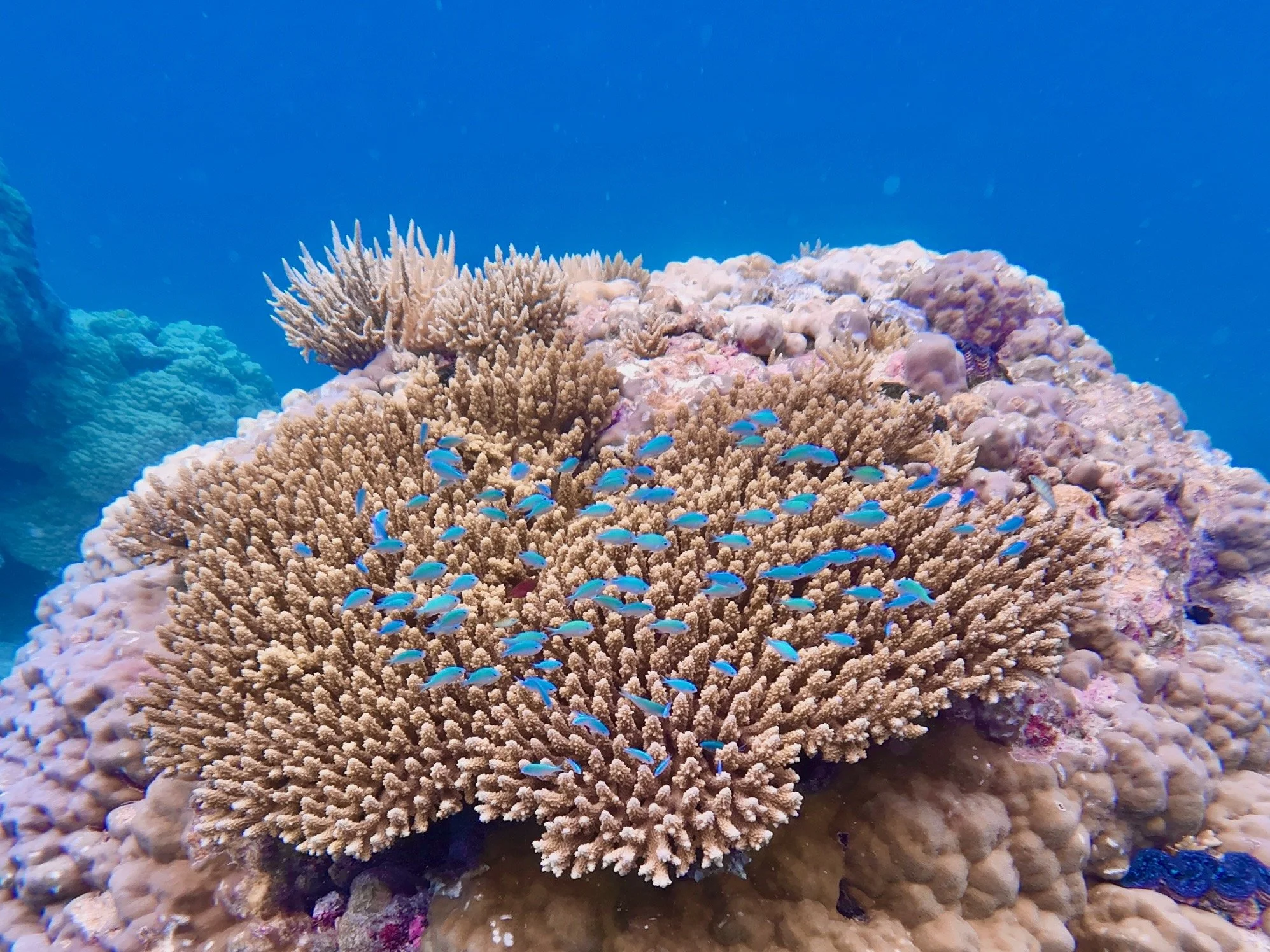
Some of the best water experiences in the world, including my new favorite – swimming with mantas. I will never forget floating in the blue water of the Marquesas while these majestic creatures fly up from the depths in formation with mouths wide open collecting plankton. Sailing with dolphins and whales on our bow as we glide through the water. Snorkeling and scuba diving with sharks, rays, corals, and innumerable reef fish. We are painfully aware that these experiences are not the same in the Western Hemisphere. Already, we have noticed a huge difference from our French Polynesia diving in 2011; coral bleaching and crown-of-thorn devastation is real. While buoyed by what we are experiencing, we are saddened at the rate of human-driven destruction.
And importantly, getting to spend time with people who live in these remote places. In Tahuata, Jimmy brought us to his house where he hand-picked a bagful of fruit from his abundant trees for us, just because he was kind. On Fatu Hiva, Poi and Reva opened their family and their home to us and other Oyster visitors. We learned what is it like to grow up on these islands, living so remotely, including sending your young children off to school on other islands, as well as their dependence on healthcare in Tahiti, a boat to a plane ride away. And the village’s dependence on the Aranui boat which supplies their island once per month. In the interim, if the island runs out, it runs out!
On the other hand, Greg and I are living our day-to-day lives with two other people in a 700-square-foot abode. Often very far from a local supermarket and pharmacy. What does this look like?
Laundry either on the boat or in local laundromats that don’t believe in robust dryers. Changing our sheets and towels regularly, yet not too regularly as they’re a lot of laundry! Same with clothes. Why dirty something else when you can just re-wear that t-shirt and shorts from yesterday?
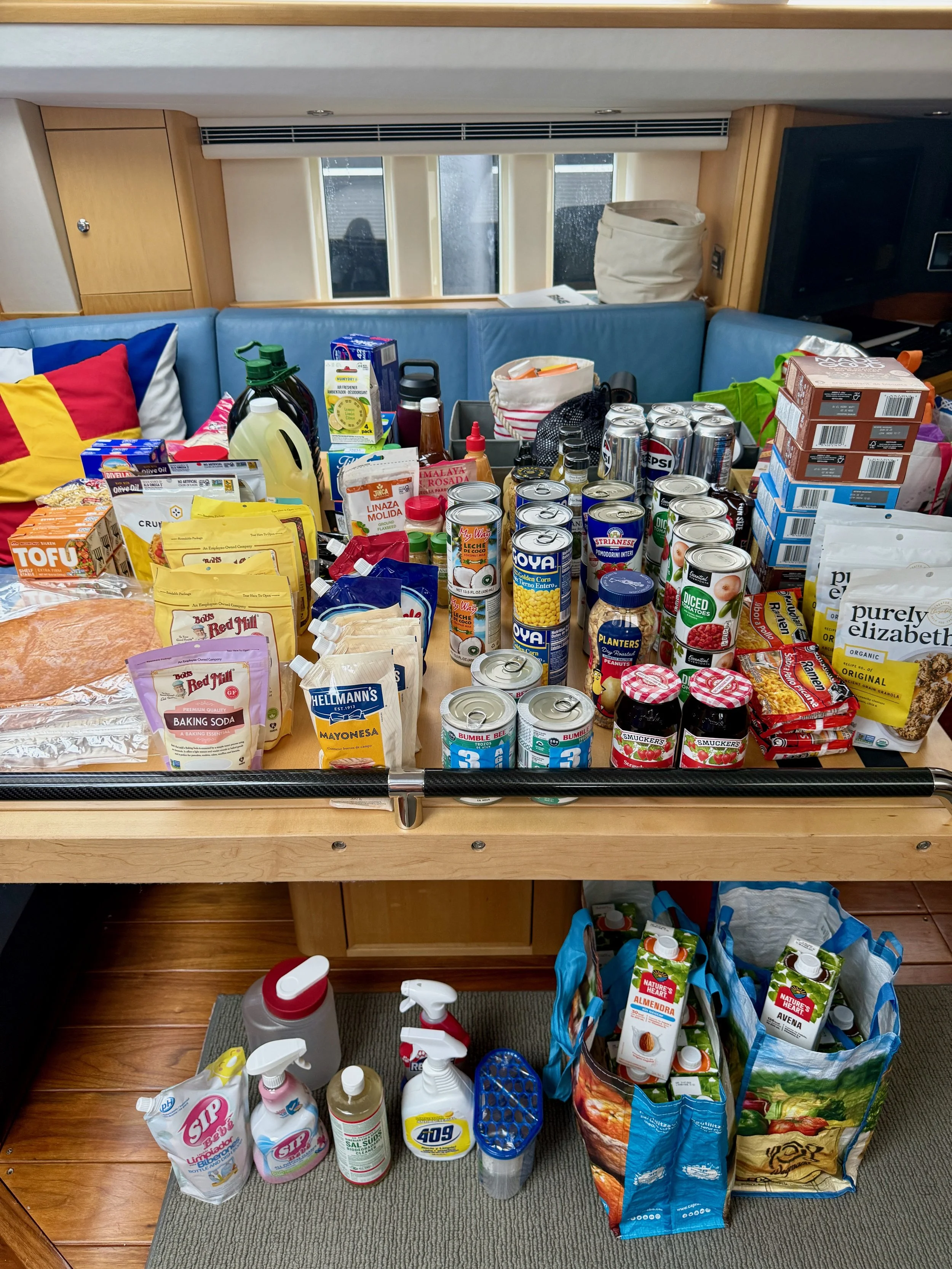
Provisioning when you must plan for weeks rather than run to the store. In fact, finding fresh fruits and vegetables at all can be a challenge! Can goods become the staple. Greg is living without Diet Pepsi. Defrosting the fridge and freezer requires way more vigilance than ours at home. We try to balance eating onshore and eating on board both for healthy foods and budget.
Things that break temporarily, like our genoa sail, water-maker, and bowsprit. Or go down for a day, giving me a heart attack, like our generator (which is totally fine). Hauling out in Panama for a new seacock set us back days. Something is always breaking on a boat. Definitely building my resilience!
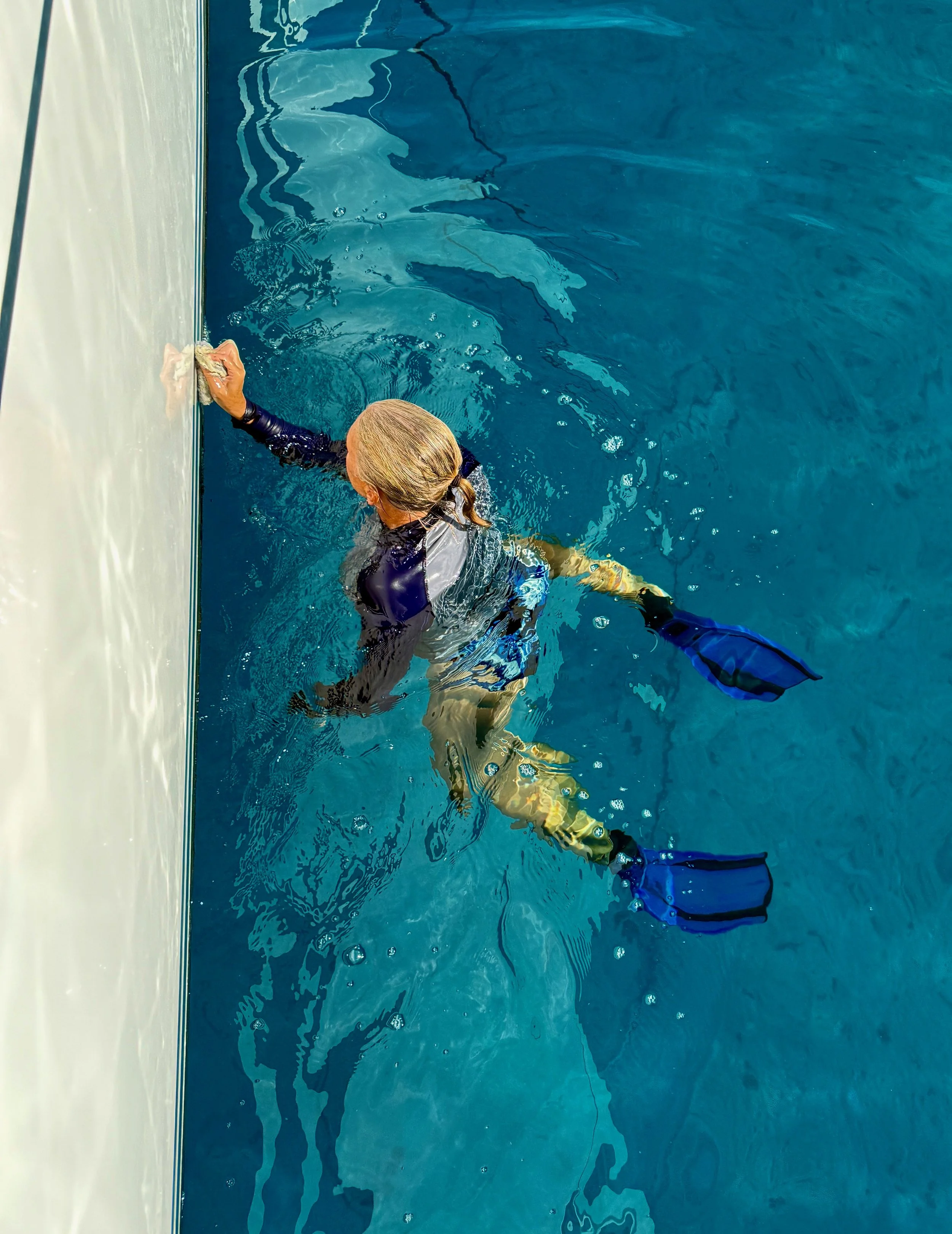
Cleaning. Small spaces get dirty quickly. Vacuuming (aka hoovering for an Aussie), surfaces, heads. Thankfully Ellie runs a very tight ship, challenging us to keep everything clean and tidy. Cleaning also includes scrubbing the waterline of the boat, which inevitably has algae and barnacles growing on it. I’ve taken that on as my personal task; I’m the water line and Greg dives the hull.
Getting work done. Continuing to support MIT courses as well as global travel with Lead Explorers. It provides some well-needed balance, but I could not do it without my son Reis who joined me at LE.
Health. Trying to anticipate every infection and illness, we have stocked the boat with enough prescriptions and over-the-counter meds for a small village. We start antibiotics for a small infection rather than waiting to see if it resolves on its own as there are very few Emergency Rooms around. Trying to avoid any major injury, we take everything around the boat at a 60-year-old pace, and I hold onto the backstay when working out. As Greg said, if you fall and break your wrist on the Pacific passage, we are 10-days away from a hospital. Sobering!
And the mundane: haircuts, no more highlighting my hair (grey, here I come), fueling the boat, finding drop-offs for garbage, figuring out if they recycle, customs and immigration, opening/closing hatches, making ice cubes, making our bed, and reading.
I am writing this on a very gray stormy day where the weather affected our activity plans and gave us more time for the mundane. I am thankful that we aren’t in this beautiful place for just a two-week holiday.
So yes, it’s part vacation and part relocation.
Maybe we’ll just call it an exploration because even Ernest Shackleton had to do his laundry.