The Canal
(Dana)
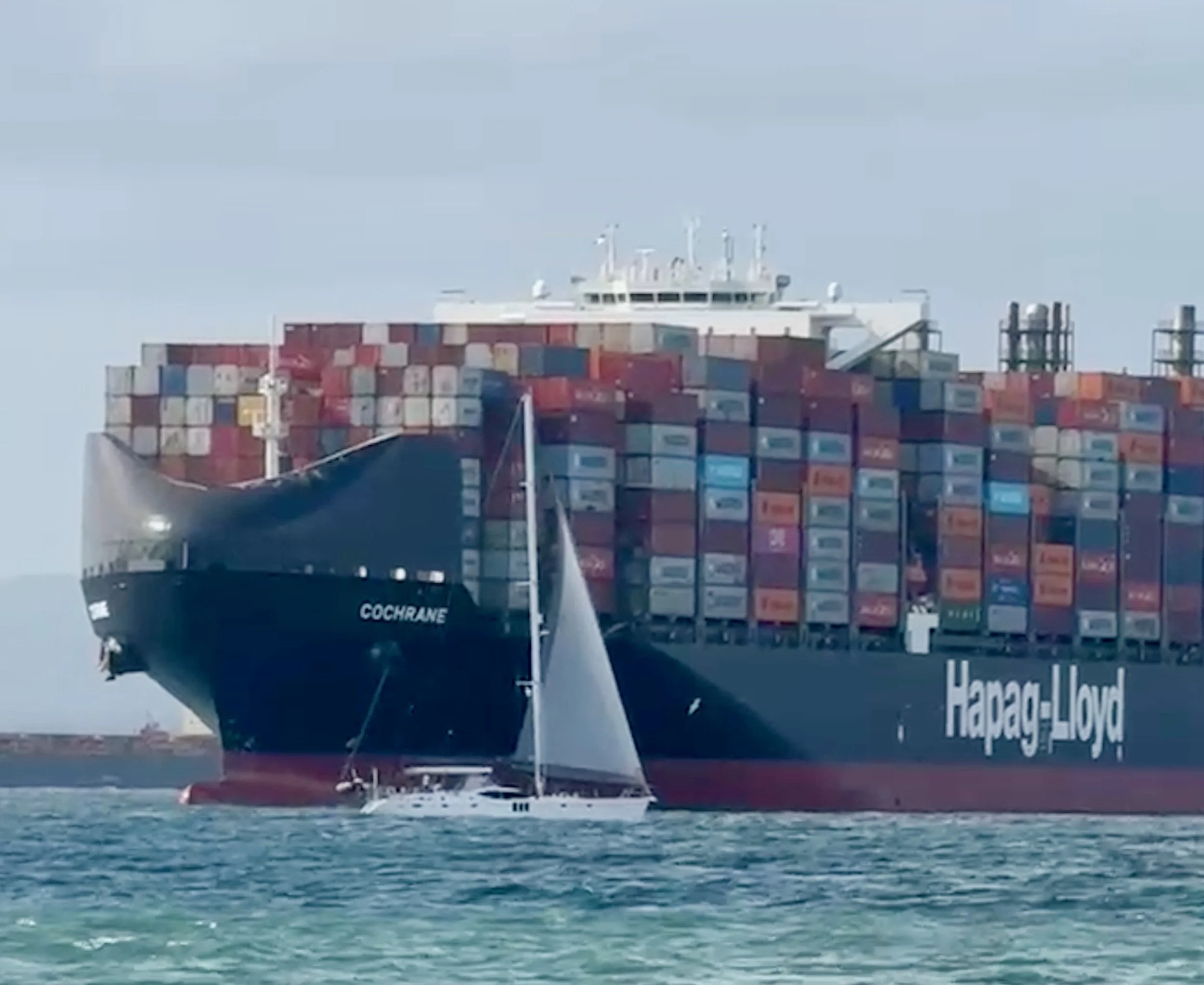
Feeling smaller than usual
Watching ships transit the Panama Canal is fun.
Transiting the Panama Canal as a crew on another Oyster is super fun.
Transiting the Panama Canal on your own sailboat is epic.
After our time in Guna Yala (the San Blas Islands) and a quick stop in Portobelo, we arrived in Shelter Bay Marina to wait for our assigned canal transit time. Every boat needs four line-handlers, so before we took Latitude through, Greg and I offered to crew for Arete, an Oyster 595. We enjoyed learning the ropes (pun intended) with Roger, Alex, and Pip, before returning to the North side to take our own boat through.
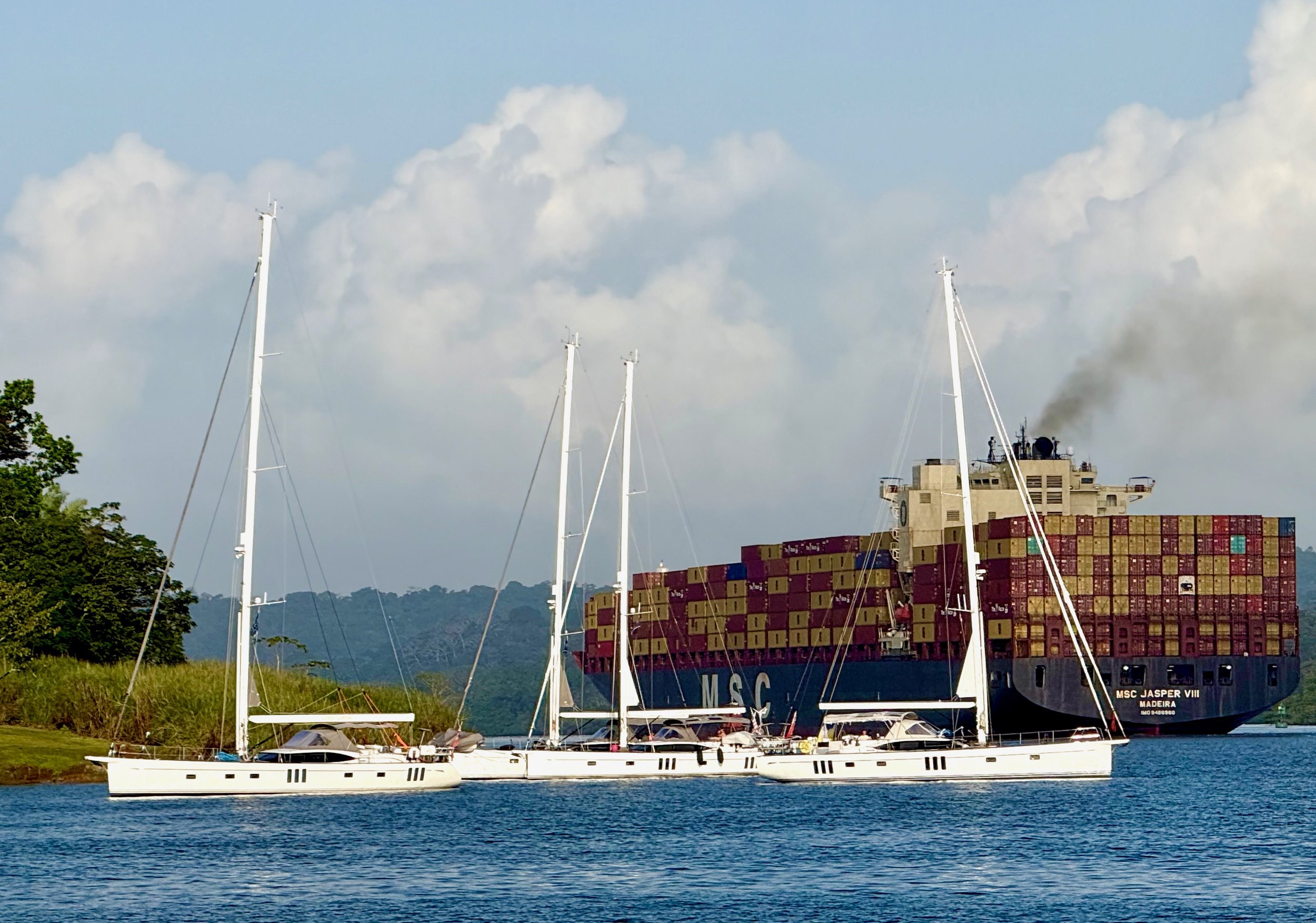
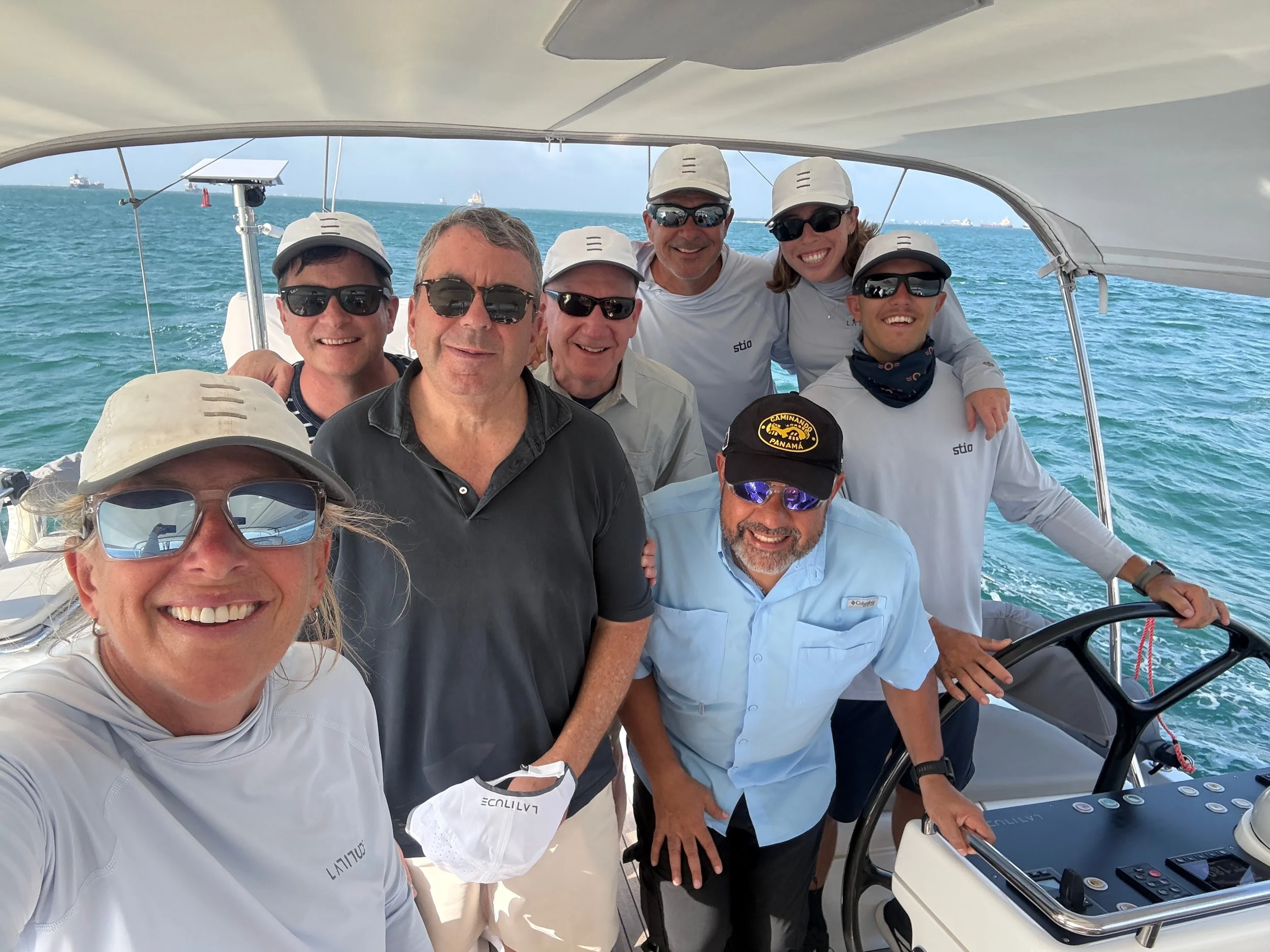
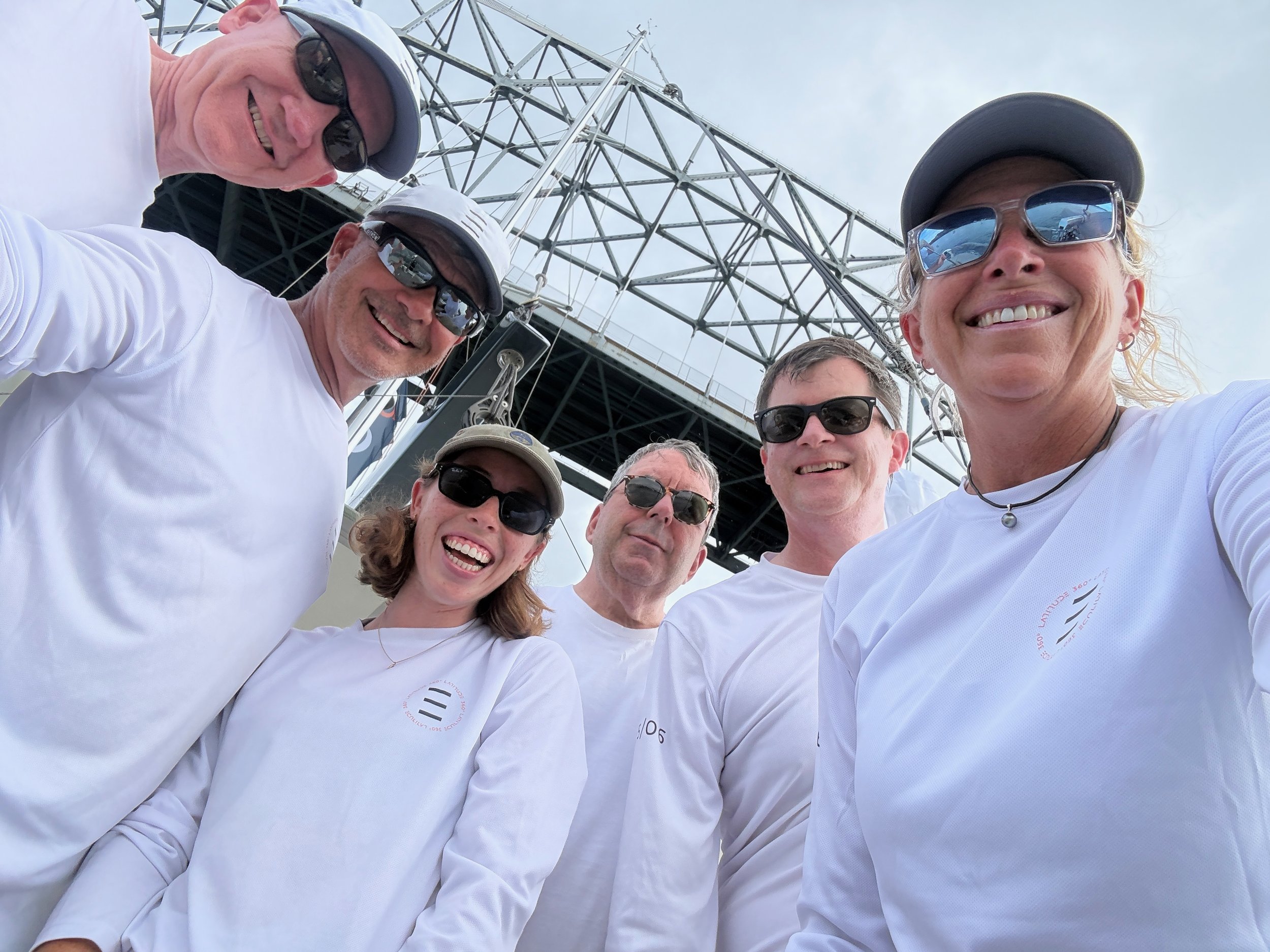
Latitude was assigned a two-day experience on February 16th and 17th. Our crack crew of friends – Phil Deutch, Bob Girvin, and Taylor Wilson – flew into Panama City and met us at Shelter Bay Marina on the 16th. We left the dock in great spirits, heading out to the anchor zone to await our pilot Luis. All boats transiting the canal are required to have onboard either a professional pilot (boats over 60’) or an advisor (boats under 60’). Vast tankers and cargo ships patiently awaited their southbound slot. Other huge ships passed by northbound after their canal journey. We felt tiny.
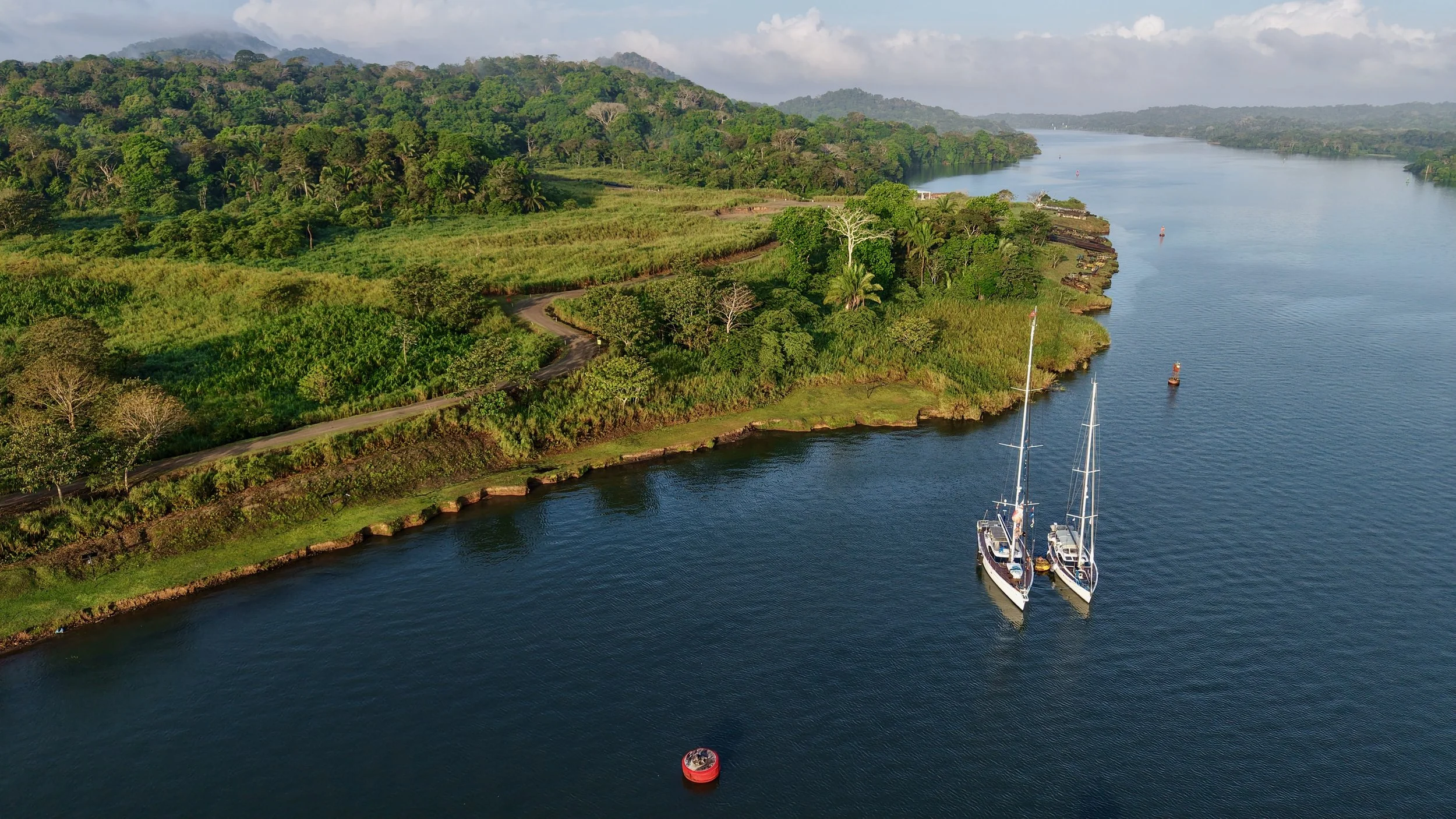
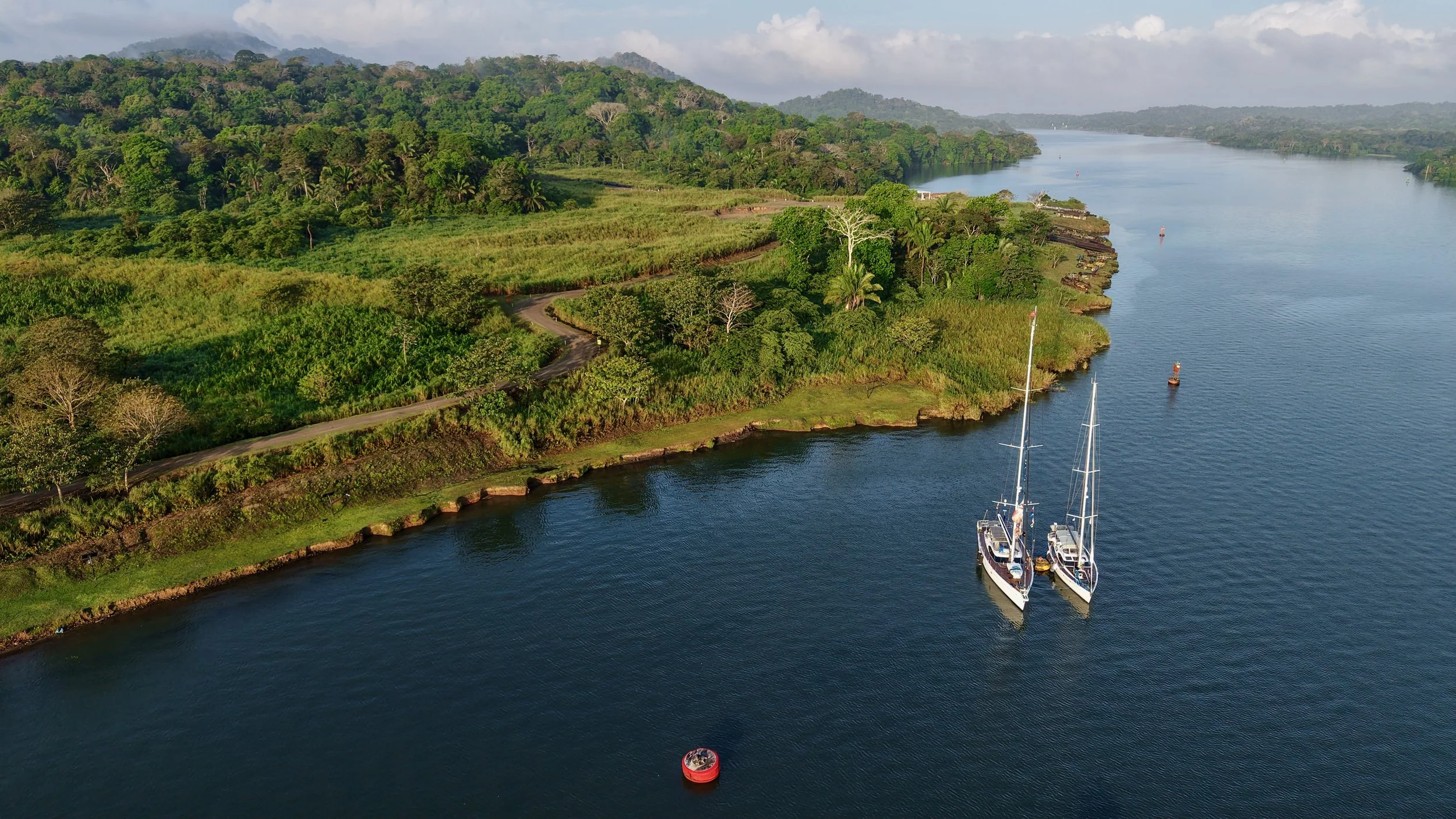
Moored in Gatun Lake
The Panama Canal is a feat of human engineering. To oversimplify the story, after 300 years of overland transit by the Spanish, in the 1880s, the French team who had successfully dug the Suez canal (through sand) attempted to dig a similar ditch across the isthmus that divides North and South America. “Only” 50 miles. But mosquitoes carrying yellow fever and malaria, as well as the mountains of the continental divide thwarted their efforts. Eyeing the opportunity, the American government helped Panama gain independence from Colombia and in 1904 began their own effort to build a canal. The brilliance of the US plan was to dam the mighty Chagres River to create Gatun Lake, thereby foregoing the need to dig 75% of the distance. Of course, the cost to the people displaced by the Gatun Dam and the creation of the Lake was immense. One of the Panamanian characters in the historical novel I read (The Great Divide) tries to balance the intense sadness of the local people with the promise of Panama at the epicenter of burgeoning global commerce. The Americans also focused on eradicating yellow-fever mosquitoes by spraying oil onto all standing water and treating malaria.
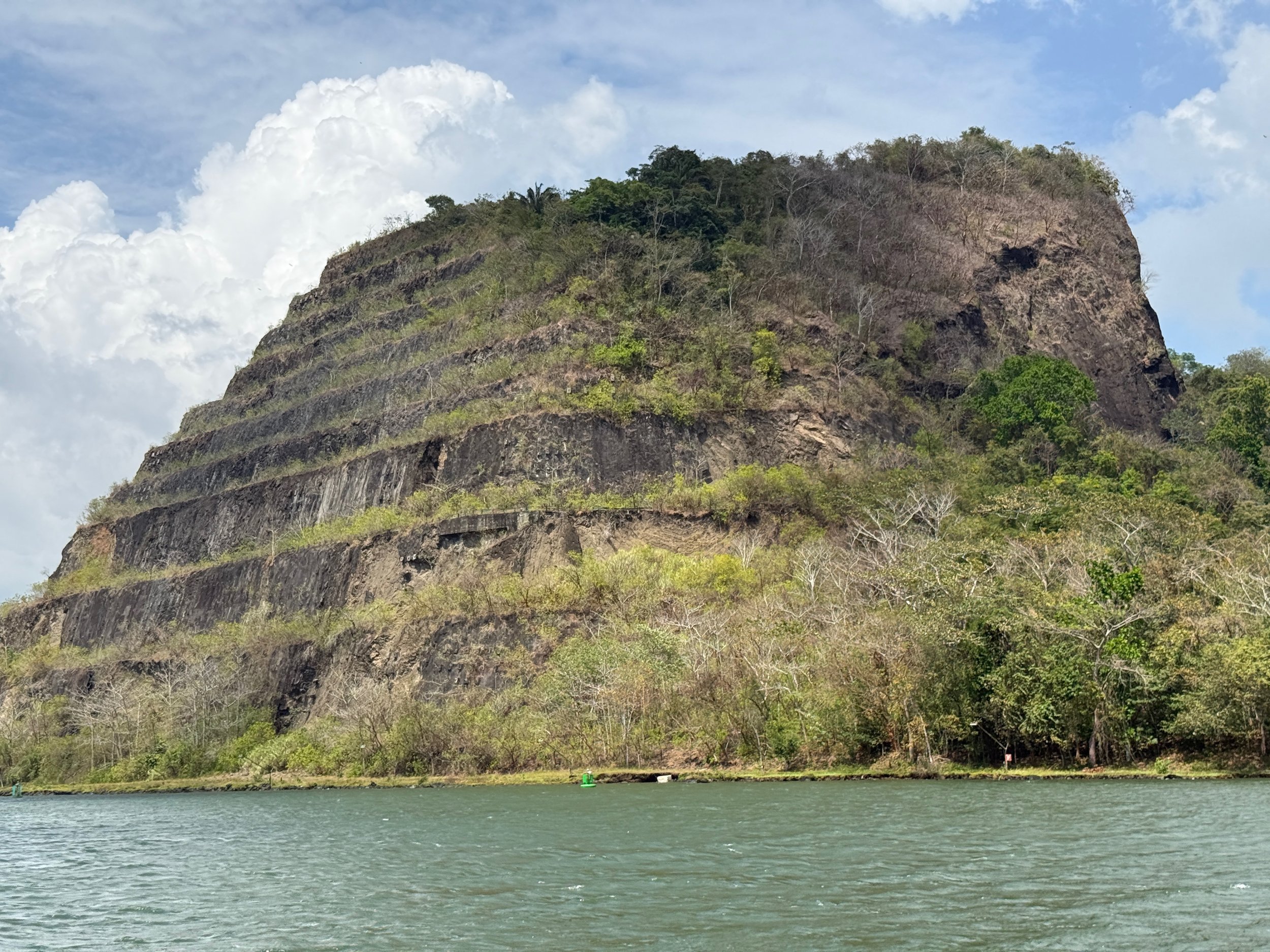
Stone mountains carved by hand at the Culebra Cut
Despite the existence of railroads and steam machinery in the early 1900s, a tremendous amount of the excavation work was done by people. Thousands of workers from around the globe, especially Caribbean nations, braved heat, mosquitoes and back-breaking work to hand dig through the mountains, creating the locks and what is now known as the 8-mile-long Culebra Cut. Because Gatun Lake is 90 feet above sea level, there are three locks that take vessels up 90 feet from the Caribbean Sea (Atlantic Ocean side) to Gatun Lake. Then three locks take boats down from the Canal into the Pacific Ocean. The locks can each take boats up to ~1000 feet in length (3 US football fields).
Perhaps not surprisingly, the Culebra Cut becomes the bottleneck as boats cannot pass each other in that “narrow” channel (which is still hundreds of meters across). So big boats go Northbound first thing in the morning, then Southbound in the afternoon. Because we are such small boats comparatively, and we cannot move as fast as the big ships, our sailboats have a different plan:
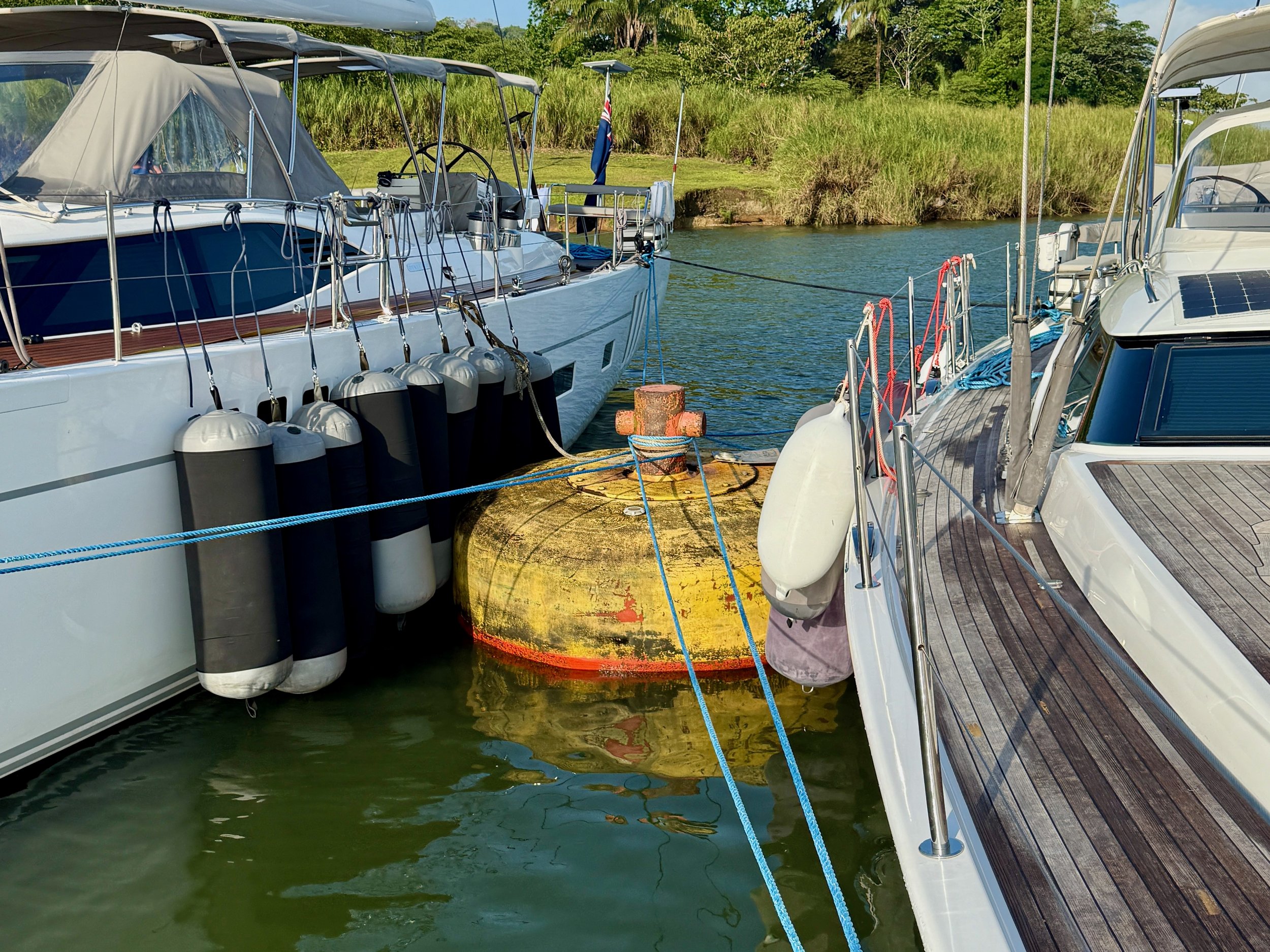
On Day 1, with our pilot, we motor southbound under the Atlantic Bridge, through the Gatun locks in the afternoon/sunset, and across Gatun Lake for ~3 hours in the dark. We moor on a huge ball for the night in the middle of the lake. We create a raft of fenders to protect us. Our pilot departs.
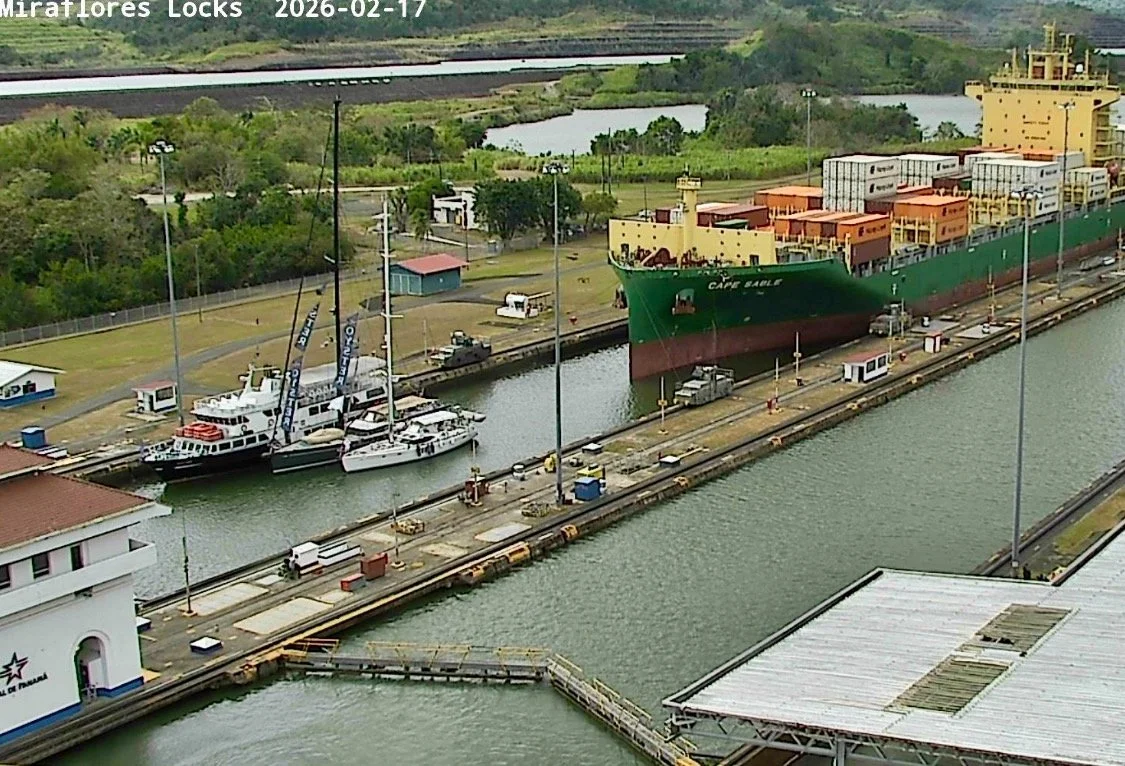
On Day 2, our new pilot Gio arrives and we leave around midday to pass through the Culebra Cut then through the Pedro Miguel Lock, under the Centennial Bridge and then 1 mile later, through the two Miraflores locks, under the Bridge of the Americas and into the Pacific Ocean.
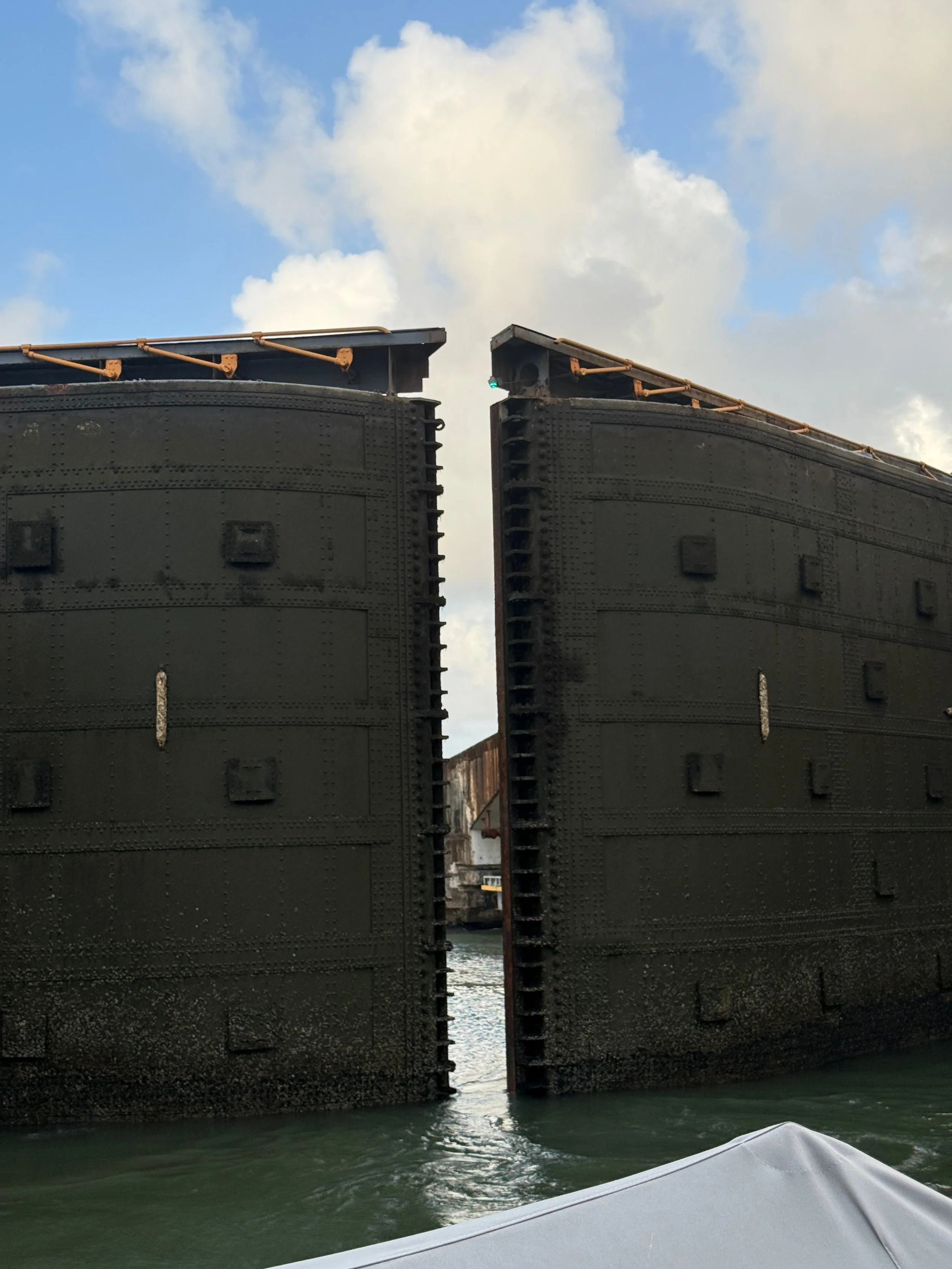
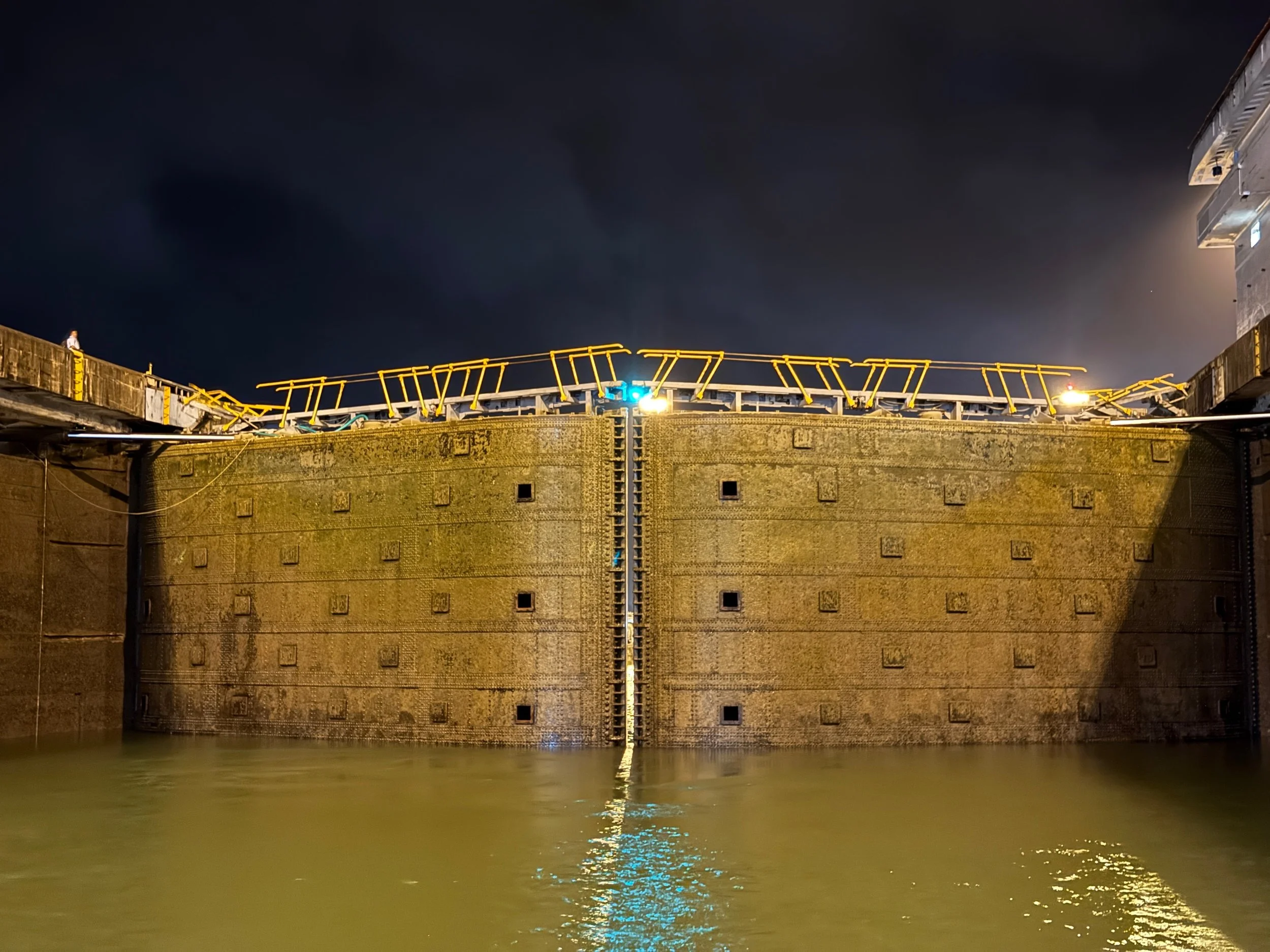
The 110 year old lock doors
Because space in the canal is so precious and our sailboats are so much smaller than the cargo ships that usually transit, we are put into a nest with 2 other sailboats. The center boat is the master and controls the main steering in the locks. As the side boat, we have 2 big lines at the front and back of Latitude that will secure us to the side of the lock. We attach our lines to lead lines tossed down by Canal workers who walk alongside us as we enter the locks. These lines bring our big lines up to bollards which keep us in place as the water rises or falls. We manage the tension on the lines as our boat moves up or down with the water. On Day 1, we are in the back of the locks behind a Canadian defense vessel and its accompanying tugboat. On Day 2, we are in front of a massive cargo ship.
Locks are simple in concept but impressive to execute at this scale. The same walls and doors are functioning after a century of 24/7 use. I loved seeing them up close. Fresh water from the lake is gravity-fed in and out via 16-foot wide culverts. Despite the turbulence in the water, it doesn’t even feel like we are moving up or down unless you look at the walls and notice the big hooks appearing and disappearing. The hooks were used by the Americans during the world wars when they needed to repair submarines. They would bring the subs into the full lock, put them in huge slings, then dump the water, creating a dry dock.
In between the locks, we marvel at human engineering and nature. A family of capybara. Birds. The terraced excavation of the Culebra Cut. Overall, a truly memorable experience.